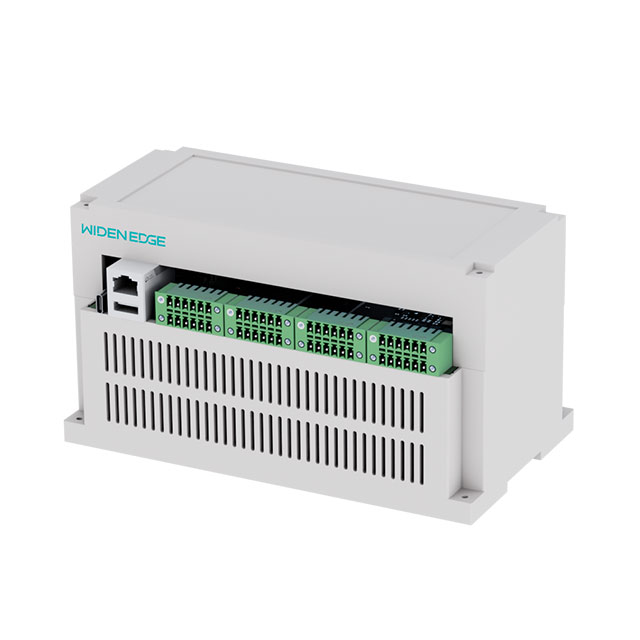
Integration becomes difficult when a microgrid contains many devices but no shared communication structure. An EMS may define energy objectives, SCADA may supervise operating status, a BMS protects battery operation, and field devices expose their own measurements and switching states.
The problem is not simply the number of devices; it is the number of interfaces that have to remain consistent. A microgrid hub controller can serve as the local connection point that organizes these interfaces, giving hybrid energy management a clearer path between supervisory software and field-level equipment.
Different System Layers Need Different Kinds of Information
An EMS is concerned with energy use and operating objectives, while SCADA focuses on supervision and visibility. The BMS reports battery conditions and limits, and field equipment supplies device-level status or accepts commands. Connecting these layers requires communication paths that can carry the relevant information without forcing every subsystem to use the same interface.
At the protocol layer, WidenEdge equips the Hub with SunSpec, Modbus TCP, and Modbus RTU support. That protocol set gives the microgrid hub controller standard industrial communication options for links to supervisory and field-level equipment.
BMS protocols can also be configured through files, and multiple BMS groups can be connected, which is useful where battery interfaces differ from other devices in the local system. A structured interface layer reduces the need to design every connection as a unique relationship, which is one reason controller architecture matters as the number of subsystems increases.
Field Switching Extends Integration Beyond Data Exchange
Not every field action is carried out through a software protocol. Electrical systems also contain contactors, breakers, and other switching devices whose state can change the physical power path. Direct field actuation is handled through dry contacts that can drive high-power switching up to 800A, adding a physical execution path alongside digital communications.
That combination broadens the function of a microgrid hub controller. It can coordinate MGC units through high-speed communication, connect BMS groups through configurable protocol files, and interact with switching hardware through dry contacts.
The result is a local integration point that connects information flow with physical execution. This distinction matters during commissioning because a communications diagram is incomplete unless the design also accounts for the field devices that actually open, close, charge, discharge, or change operating state.
A Shared Local Node Reduces Point-to-Point Integration
If every supervisory platform had to connect separately to every converter, BMS group, and switching device, the number of communication relationships would grow quickly. A local hub changes that structure by concentrating coordination around one controller layer.
Hybrid energy management can then use the Hub as a common local node while individual field devices remain connected through the interfaces appropriate to them. At the converter layer, a single Hub can coordinate a parallel group of up to 32 MGC units.
Command traffic uses 1MHz CAN, while the stated interval from grid dispatch to power output is under 10ms. These capabilities make the controller suitable for local coordination where several power-conversion units have to react to commands without each supervisory system managing them individually.
In a larger installation, that arrangement also gives the supervisory layer a clearer boundary: it can work with the local controller while the local controller handles the immediate coordination of multiple conversion units.
Web Access Adds a Configuration Layer to the Communication Architecture
Integration work continues after initial wiring. Protocol settings, BMS configurations, software versions, and connected equipment may need adjustment during commissioning or maintenance. WidenEdge includes a built-in mini Web server and Web UI access in the Hub, together with software-upgrade capability.
Browser-based access gives technicians a local management path without requiring routine configuration to be performed separately at every power device. For hybrid energy management, this matters because the controller is not only a traffic point for operating data. It is also a configurable part of the system architecture.
Changes to controller software or BMS protocol files can be managed at the local control layer while the connected EMS, SCADA, and field devices retain their respective system roles. A common local management point can also make later device additions easier to organize, provided the required protocols and control relationships are supported by the installed system.
Integration Works Best When Responsibilities Stay Clear
A hub controller does not replace the EMS, SCADA platform, BMS, or power-conversion equipment. Its value comes from linking those layers while preserving what each one is responsible for. Supervisory systems can remain focused on energy objectives and visibility, battery systems on battery protection and limits, and field devices on physical operation.
Keeping those boundaries clear also makes troubleshooting more structured because communication, battery management, supervisory logic, and field execution can be examined as separate layers. In WidenEdge’s Hub, supervisory communication, battery access, converter coordination, field switching, and Web management are brought into the same local control layer.
A microgrid hub controller reduces integration complexity by giving these different connections one coordinated local center. In that structure, hybrid energy management becomes less dependent on a web of isolated point-to-point relationships and more dependent on a clearly defined control hierarchy.
SEO Title: How a Microgrid Hub Controller Connects EMS, SCADA, BMS, and Field Devices | WidenEdge
Meta Description: Read our latest insights on How a Microgrid Hub Controller Connects EMS, SCADA, BMS, and Field Devices. Explore communication, switching, and system roles.