Eco-tourism operators need camping equipment that can support comfortable outdoor experiences while remaining practical to transport, maintain, and reuse. Procurement decisions therefore involve more than product appearance or purchase price. Weight, durability, versatility, material selection, and supplier support can all influence whether equipment remains effective across changing locations and repeated guest use.
What Eco-Tourism Procurement Should Prioritize
Eco-tourism businesses often operate in environments where logistics can be more complicated than conventional retail or hospitality settings. Equipment may need to travel to remote campsites, be carried over uneven terrain, assembled regularly, and stored between guest stays. These conditions make efficient product design especially valuable.
The THECATAL outdoor company describes its products as part of an outdoor technology approach intended for different camping environments, from wilderness activities to family camping. Its company information also states that it engages in long run collaborative work with manufacturing operators and supply side partners, conducting ongoing tests and audits in accordance with its internal benchmarks.For procurement teams, these details highlight the importance of considering both product capabilities and supplier practices when building an equipment portfolio.
A useful procurement strategy should begin by identifying the actual operating environment. A guided mountain camp may prioritize lightweight shelters, while a family-oriented eco-resort may require greater interior space and simpler setup. Matching equipment to use cases can reduce unnecessary purchases.
Lightweight Equipment for Remote Campsites
Weight can become a major operational issue when equipment has to be transported beyond vehicle access. Staff members and guides may need to carry tents, shelters, accessories, and replacement components over considerable distances.
Lightweight construction can reduce the physical burden of transportation and make temporary camp setup more manageable. However, procurement teams should avoid evaluating weight in isolation. A product that saves weight but lacks sufficient durability, weather protection, or functional flexibility may not provide useful savings over its full-service life.
Compact packed dimensions also matter. Products that take up less storage space can simplify transport logistics and make it easier for operators to move equipment between campsites. For businesses with limited storage capacity, packability can be almost as relevant as carrying weight.
Multifunctional Products for Flexible Operations
Eco-tourism operations often need equipment that can support different activities. A shelter may be needed as a sleeping structure during one trip, a weather-protection area during another, or additional covered space at a campsite.
This is where multifunctional design can improve procurement efficiency. Instead of purchasing separate products for every function, operators can select equipment that adapts to different situations. Such flexibility can also reduce inventory complexity and make staff training easier.
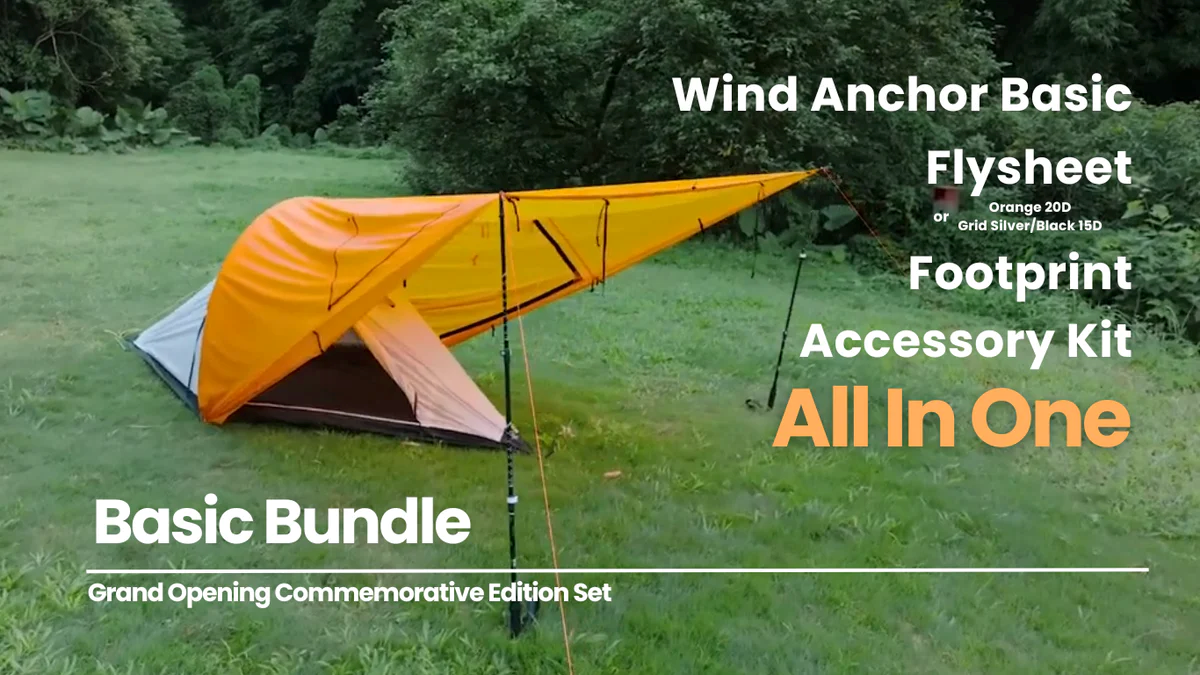
The Wind Anchor range is an example of a shelter approach built around multiple configurations. Its flysheet can function as an outer rain layer, a vestibule, or a standalone shelter, depending on how it is deployed. This type of adaptability can be useful for eco-tourism operators managing varied activities and changing weather conditions.
For procurement teams researching innovative camping products, the key question should be whether innovation solves a real operational problem. A new design has greater practical value when it helps reduce carried weight, simplify setup, create additional shelter space, or improve equipment utilization.
Durability for High-Frequency Use
Commercial eco-tourism equipment can experience much more frequent use than privately owned camping gear. Tents and shelters may be assembled, dismantled, transported, cleaned, and stored repeatedly throughout the season.
Durability should therefore be considered at the component level. Fabrics, seams, poles, cords, clips, zippers, and attachment points all contribute to the performance of the finished product. Procurement teams should examine whether these elements are appropriate for repeated outdoor use rather than relying on a single durability claim.
Maintenance requirements are equally relevant. Products that can be inspected, cleaned, dried, and stored using straightforward procedures are often easier to manage across larger inventories. A simple maintenance routine can also help operators identify small defects before they become operational problems.
For eco-tourism businesses, longer service life can support better resource management because replacing equipment less frequently may reduce purchasing, transportation, packaging, and disposal requirements.
Weather Resistance and Guest Comfort
Outdoor visitors may encounter sun, rain, wind, humidity, and temperature changes during the same trip. Shelter equipment therefore needs to provide appropriate weather protection while also maintaining a comfortable interior environment.
Water resistance is an important consideration, but procurement teams should also look at ventilation and airflow. A shelter that limits external moisture while allowing appropriate air exchange can help reduce condensation and improve the camping experience.
Guest comfort has direct operational value. If a shelter is difficult to enter, poorly ventilated, or unsuitable for changing weather, staff may need to spend more time making adjustments or responding to guest complaints. Better-designed products can reduce some of these operational pressures.
Sustainable Procurement Beyond Material Labels
Eco-tourism naturally encourages buyers to consider environmental impact, but sustainable procurement should not depend on one recycled or bio-based material claim. A more complete assessment can consider product lifespan, transportation weight, multifunctionality, maintenance needs, packaging, and replacement frequency.
A durable product that remains useful for several seasons may reduce the need for frequent replacement. Likewise, a multifunctional shelter can potentially reduce the number of separate products an operator needs to maintain. Lightweight construction may also make transportation more efficient, although the overall environmental impact still depends on the entire product lifecycle.
This broader perspective can help procurement teams avoid treating sustainability as a marketing category and instead evaluate how equipment performs throughout its ownership period.
Selecting a Supplier for Long-Term Support
Supplier reliability is particularly important when camping equipment is purchased for commercial operations. Businesses may need consistent product availability, accurate specifications, warranty assistance, and timely responses when problems occur.
THECATAL’s company information states that it develops enduring working partnerships with production contractors and upstream supply players and carries out continuous testing and audit procedures. It also provides information about its product categories and company approach, giving professional buyers more context when evaluating a potential outdoor equipment source.
For procurement managers, supplier evaluation should include communication quality, production consistency, product support, and after-sales policies. A supplier that can maintain these areas may be easier to work with as an eco-tourism operation expands or replaces equipment over time.
Building a Practical Eco-Tourism Equipment Portfolio
The most useful procurement strategy combines lightweight equipment, multifunctionality, durability, weather protection, and manageable maintenance. Operators should select products according to actual guest activities and campsite conditions rather than purchasing based only on trends or promotional claims.
A well-planned portfolio can also improve resource utilization. Products that serve several purposes or remain useful across different seasons can reduce inventory duplication and make equipment management more efficient.
Making Procurement More Effective
Eco-tourism buyers need equipment that balances practical performance with long-term operational needs. The THECATAL approach offers one example of combining adaptable outdoor design, supplier management, and varied camping applications. For procurement teams, comparing products according to weight, versatility, durability, maintenance, and intended use can lead to more informed purchasing decisions.