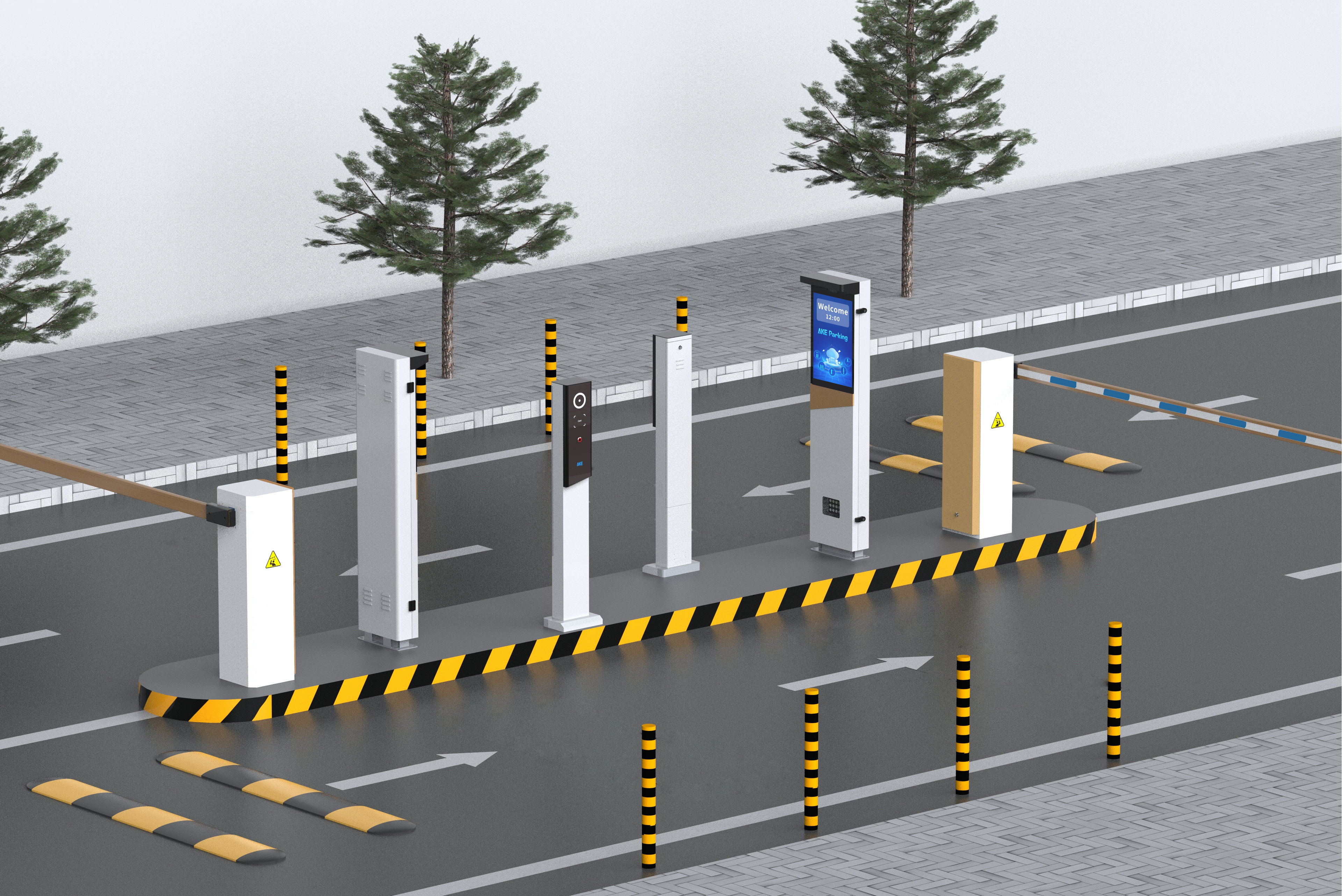
Procurement for a busy entrance begins with an unresolved question: does traffic arrive in short bursts, keep the barrier cycling throughout the day, or include vehicles with different recognition requirements? Those patterns impose different demands on equipment. A fast gate may suit frequent movements yet still require suitable triggering, clearance, and control interfaces. Specifications become useful selection evidence after the entrance’s operating conditions have been described.
Define the Entrance Demand
Short arrival bursts at shift changes create a different workload from steady movements throughout a commercial garage’s operating day. The first concentrates demand into limited periods; the second repeatedly operates the barrier mechanism. Recording the arrival pattern establishes which workload a proposed installation is expected to accommodate.
Vehicle types add another dimension. Passenger cars, service vehicles, and nearby non-motor traffic can present different capture and filtering conditions. Comparing LPR parking management systems against that mixture begins with identifying intended users, their paths, and any interactions required at the entrance. Daily vehicle totals alone leave these conditions undefined.
The site description also records lane layout, available installation space, required arm form, and the existing control platform. A proposed LPR parking system can then be assessed against identifiable constraints. The resulting specification contains the traffic pattern and physical conditions that each candidate must address.
Select Capture for the Traffic Mix
Mixed traffic brings the capture trigger into the selection decision. Video triggering starts capture from image-based detection, while loop triggering uses a vehicle detector’s signal. A combined arrangement provides another configuration choice. The appropriate mode for an LPR parking system depends on the lane’s detection conditions and intended vehicles.
Non-motor vehicle filtering becomes relevant where adjacent traffic passes the busy lane without belonging to its intended vehicle flow. AKE Parking’s All-in-One LPR Camera includes that function alongside virtual-loop vehicle-type detection. The capture method depends on actual site detection conditions, with video triggering, loop triggering, and a combined mode available.
Blacklists and whitelists serve a different purpose: they relate identified vehicles to access rules. They are not substitutes for detecting the intended traffic. During evaluation of LPR parking management systems, matching observed passages to capture events establishes whether the chosen trigger and filtering settings fit the entrance’s actual vehicle mix.
Fit Barrier Movement to Safe Passage
The barrier arm moves through a space that a passing vehicle may still occupy. Its length and form therefore belong alongside motion settings in the selection criteria. For an LPR parking system, a straight, fence, foam, or folding arm must suit the lane geometry and the intended passage arrangement.
AKE Parking’s High-Speed Barrier Gate offers adjustable opening and closing from 1 to 6 seconds, with straight, fence, foam, and folding fence configurations. LED light arms are optional. Its safety interfaces include loop-based anti-smashing, expansion for infrared or pressure-wave sensing, and fire alarm linkage. Optional sensing requires explicit inclusion in the project configuration.
The Smart Barrier Gate adjusts speed according to traffic flow and arm length, also within a 1-to-6-second range. In LPR parking management systems, these figures describe mechanical movement, not guaranteed vehicle throughput. Safe passage remains tied to occupancy detection and the selected control settings, even when the arm moves quickly.
Interpret Lifespan, Environment and Interfaces
A cycle-life figure describes repeated operation; a temperature range defines specified environmental limits. Both inform equipment selection without supplying a warranty duration. High-Speed and Smart each list a service life of five million cycles. A site’s demand profile provides the context for considering that figure, without converting it into guaranteed years of service.
High-Speed specifies IP54 protection, operation from -40°C to +85°C, an AC 220V ±10% supply, and 150W rated power. Its RS485 or switch-signal interfaces are relevant to connecting a proposed LPR parking system with site controls. Enclosure protection, supply provision, and signal compatibility answer separate installation questions.
Smart’s 24V DC brushless motor, planetary gearing, and four-link mechanism support frequent reversing over a 24-hour period. Frequent cycling is one requirement for a barrier used in LPR parking management systems. The gate’s environmental ratings and control interfaces must also match the installation.
Turn the Shortlist into Purchase Conditions
Configuration defines the purchase: arm form, sensing options, cabinet design, and installation requirements establish what a quotation covers. AKE Parking offers quality and price advantages and accepts customization, including cabinet, illuminated-arm, color, and OEM options across the stated products. Comparing quotations for an LPR parking system requires the same relevant configuration to remain visible.
Single-unit orders are available, with freight paid by the purchaser. Initial site evaluation can proceed with one purchased device. AKE Parking offers a one-year warranty, a supply term separate from the model’s specified cycle life used to assess repeated mechanical operation.
For LPR parking management systems, the purchasing record can link each selected option to its site requirement and an agreed demonstration. It identifies which triggers, arm movements, sensing provisions, and interfaces will be evaluated. Customization requests then have a defined purpose and a configuration against which delivery can be assessed.
A shortlist becomes narrower as unsuitable traffic, arm, environment, and interface combinations are excluded. A limited installation can provide evidence about those conditions, but its findings remain bounded by the vehicles and workloads actually observed. The final selection rests on a documented fit between the candidate equipment and the entrance’s vehicle mix, barrier arrangement, operating environment, and control connections.