Modern telecommunications networks manage millions of complex data transactions every second across highly diverse service domains. When charging systems, partner settlements, and physical network nodes fail to synchronize perfectly, billing anomalies inevitably surface. Integrating specialized telecom AI engines allows service providers to identify these financial discrepancies in real time before they impact subscribers.
This automated approach replaces slow, error-prone manual audits with continuous, intelligent system scans. By tracking transaction histories across multiple networks, systems can isolate structural bugs and prevent revenue leakage. Transitioning to advanced intelligent software remains essential for keeping pace with complex, multi-service charging configurations.
Understanding the Roots of Cross-Domain Discrepancies
Modern service bundles frequently combine traditional voice packages with cloud storage, partner streaming services, and international data roaming. These diverse offerings rely on separate backend rating engines that often struggle to communicate without translation errors. These disconnected data pathways are the primary cause of billing disputes and costly financial reconciliations.
To resolve these integration challenges, Whale Cloud advocates for the deployment of intelligent, self-learning audit systems. These systems monitor data flows continuously, matching actual network resource consumption with generated invoices automatically. This complete visibility prevents localized technical errors from snowballing into massive billing disputes.
The Evolution of Autonomous AI Agents in Telecom Architectures
Resolving complex billing conflicts traditionally requires senior database administrators to execute tedious SQL queries across multiple department silos. This human-dependent process introduces significant delays, occasionally leaving system bugs unresolved for several billing cycles. Deploying autonomous AI agents in telecom architectures addresses this latency by automating complex diagnostic pipelines.
These software entities possess the capability to observe system states, make logical decisions, and execute corrective scripts independently. By utilizing advanced machine learning, they can navigate across diverse databases to trace the exact origin of a billing mismatch. This active intervention minimizes operational workloads while guaranteeing high billing precision.
Empowering Operators with Specialized Language Models
Standard generic intelligence tools often struggle to interpret the highly specialized terminology and custom data structures used within telecom environments. Processing complex charging records demands systems that possess a deep, native understanding of telecommunication protocols and data formats. Utilizing optimized, industry-specific language models helps automation tools can parse technical system logs with maximum accuracy.
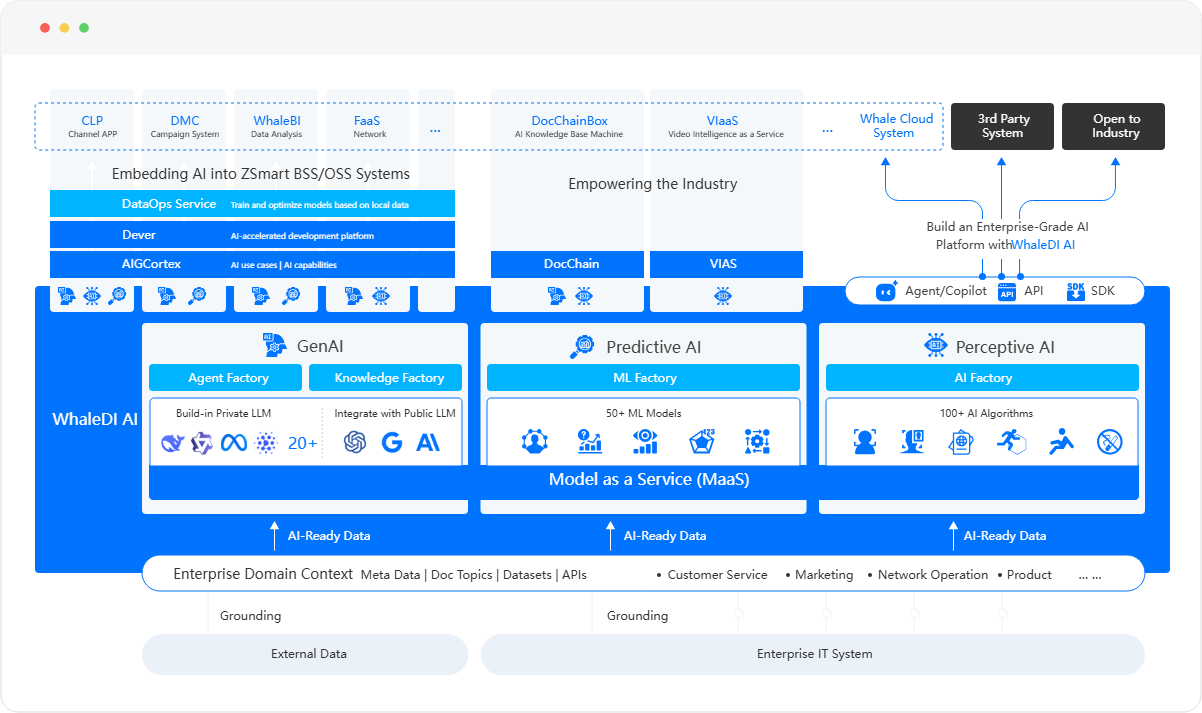
The deployment of WhaleDI AI leverages advanced GenAI technology to interpret unstructured data streams and technical manuals seamlessly. This specialized framework translates complex billing logs into clear, actionable summaries for operations teams. This semantic clarity helps developers isolate and patch underlying rating engine bugs much faster.
Leveraging Data Mining to Predict Billing Anomalies
Preventing charging discrepancies requires proactive detection algorithms that can identify subtle, early warning signs of system degradation. Standard rule-based monitoring tools only trigger alerts after a massive failure has already affected thousands of user accounts. Utilizing predictive data mining models helps operators anticipate software conflicts before they cause actual charging errors.
With over 50 data mining models integrated into modern telecom AI platforms, operators can continuously analyze historical transaction records. These algorithms detect minor deviations in rating behavior that suggest a potential system conflict. This predictive capability allows maintenance teams to fix system errors before they impact active subscribers.
Standardizing Visual Audits in Physical Operations
Billing anomalies are not restricted to digital databases; they can also stem from misconfigured hardware or physical equipment faults. When network cards malfunction or physical connections degrade, data packets may be dropped or counted twice by rating systems. Incorporating automated visual monitoring tools helps engineering teams detect physical equipment degradation before it corrupts billing records.
Utilizing 100+ visual AI algorithms allows systems to monitor physical hardware racks and network infrastructure sites automatically. This visual intelligence helps physical environment issues are reported and fixed before they disrupt database integrity. Consequently, Whale Cloud helps operators maintain absolute consistency between physical network performance and backend financial transactions.
Achieving Comprehensive Intelligent Upgrades
Modernizing legacy infrastructure requires a holistic transformation strategy that spans across customer service channels, marketing departments, and backend networks. If an operator only upgrades its network systems while leaving its customer portals outdated, billing disputes will still cause high churn. Achieving comprehensive upgrades supports every touchpoint operates with identical, real-time transaction data.
Deploying autonomous AI agents in telecom systems helps customer service representatives can explain complex charges instantly. These intelligent assistants can query live network telemetry to verify specific data usage events during support chats. This immediate transparency resolves disputes during the first contact, reinforcing subscriber trust.
Securing Long-Term Operational Efficiency
The rapid introduction of virtualized network slices and IoT devices demands billing software that scales dynamically without requiring expensive custom upgrades. Standard, rigid software designs cannot keep pace with the sheer volume of micro-transactions generated by modern smart devices. Transitioning to open, adaptive architectures protects previous software investments while paving the way for future upgrades.
Implementing highly unified telecom AI frameworks allows operators can monetize novel 5G services with absolute billing accuracy. Relying on the scalable, intelligent solutions designed by Whale Cloud prepares operators for the next phase of digital business models. Standardized, self-healing networks remain the ultimate foundation for sustainable growth in the intelligent era.
Conclusion
Managing cross-domain billing anomalies is crucial for maintaining high subscriber satisfaction and protecting enterprise revenue in modern networks. Deploying autonomous AI agents in telecom environments allows operators to detect, diagnose, and resolve charging discrepancies with minimal manual effort. These intelligent upgrades keep complex, multi-vendor ecosystems remain highly stable and efficient.
Utilizing advanced platforms like WhaleDI AI enables telecommunications providers to automate complex operations across channels, marketing, and network layers. This comprehensive integration lowers operational costs while eliminating data discrepancies between physical networks and backend systems. Embracing specialized, standard-compliant automation is the key to thriving in a hyper-connected global marketplace.