Marine vessels combine fuel, cargo, machinery, chemicals, enclosed compartments, and demanding operating conditions. These factors can create atmospheres containing oxygen deficiency, flammable gases, or toxic vapors. The International Maritime Organization (IMO) identifies enclosed spaces such as cargo holds, fuel tanks, ballast tanks, pump rooms, cofferdams, and void spaces as areas where dangerous atmospheres may occur.
For crew members, the danger can develop before a problem is visible or noticeable. A space that appears normal may contain an unsafe concentration of gas, while a previously tested area can become hazardous later because of leakage, cargo residues, poor ventilation, or changing operating conditions. Gas detection therefore needs to be part of planned onboard safety procedures rather than an emergency-only activity.
Key Areas for Marine Gas Detection
Different parts of a vessel present different atmospheric risks. Cargo holds and tanks may retain vapors from transported materials, while engine rooms can contain combustible gases associated with fuel systems or other equipment. Bilges and pump rooms can also require careful monitoring because gases may accumulate in areas with limited ventilation.
Enclosed-space entry deserves particular attention. SOLAS regulation XI-1/7 requires ships to carry appropriate portable atmosphere-testing instruments capable, at minimum, of measuring oxygen, flammable gases or vapors, hydrogen sulfide, and carbon monoxide before entry into enclosed spaces. This requirement highlights the importance of portable detection equipment in routine marine safety.
Choosing the Right Gas Detector for Vessel Operations
A suitable Gas Detector should match the vessel, work area, target gases, and sampling method. A single-gas instrument may be appropriate for a focused task, while a multi-gas unit can be more practical when several atmospheric hazards need to be assessed at the same time.
Sampling method is another important consideration. Diffusion instruments detect gases that naturally reach the sensor, making them useful for personal monitoring and accessible areas. Pumped instruments actively draw air through a sampling line, which can help operators test tanks, holds, or other spaces before entering them.
For marine applications, environmental protection also matters. Equipment may encounter humidity, dust, temperature changes, vibration, and demanding working conditions. Buyers should therefore compare operating temperature, humidity limits, ingress protection, battery endurance, alarm methods, sensor life, calibration requirements, and available accessories before selecting a detector.
A Practical Marine Multi-Gas Solution
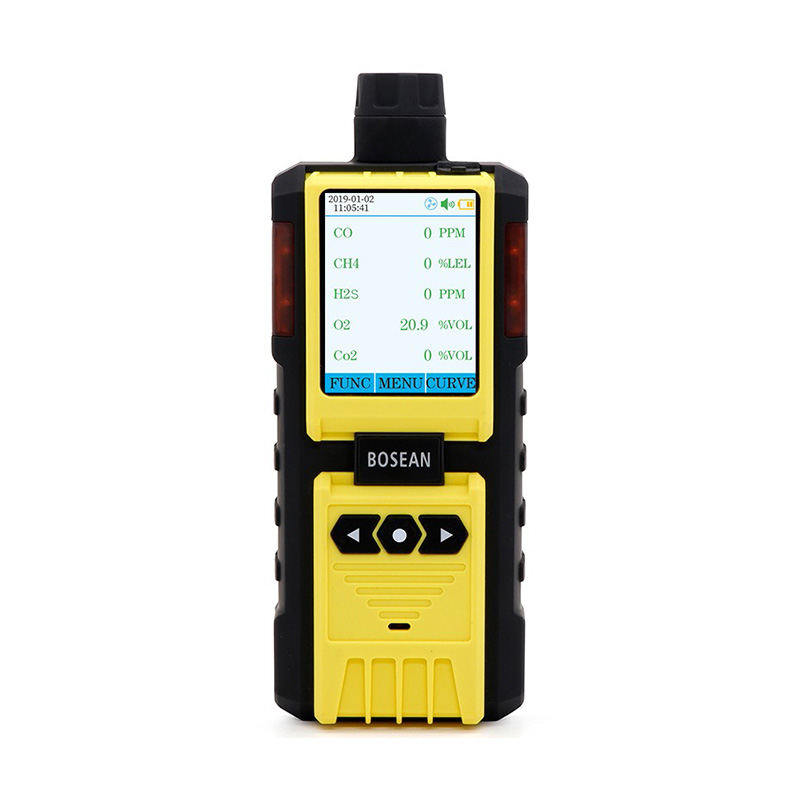
The portable gas detector range from Bosean includes single-gas, multi-gas, gas-leak, mining-use, and marine detection options. One marine-focused model is the K-600 Marine 5 in 1 Multi Gas Detector, designed to monitor carbon monoxide, hydrogen sulfide, oxygen, carbon dioxide, and methane in areas including engine rooms, cargo holds, pump rooms, and ballast tanks.
The K-600 uses pump sampling and combines NDIR sensors for CO₂ and CH₄ with electrochemical sensors for O₂, CO, and H₂S. Its specifications list an accuracy of no more than ±5% F.S., a response time of no more than 30 seconds, and continuous working time of at least eight hours without alarming.
The unit operates at -20°C to 50°C with humidity below 95% RH without dew. It uses a 3.7 V, 3200 mAh lithium-ion battery and has a stated charging time of six to eight hours. The detector is rated IP65 and Ex ib IIC T4 Gb, with dimensions of 130 × 67 × 30 mm and an approximate weight of 400 g including the battery.
These specifications can support marine inspection tasks, but operators should still confirm that the sensor combination, measuring ranges, alarm settings, sampling accessories, and certification requirements match their application.
Building a Reliable Gas Detection Routine
A detector is most effective when it supports a structured safety process. Before entering an enclosed space, personnel should identify potential hazards, ventilate as required, test the atmosphere using suitable equipment, and follow the vessel’s established entry procedures. Continuous or repeated testing may also be necessary when conditions can change during the work.
Sampling should reflect the physical characteristics of the space. Gas concentrations may vary by location and height, so testing only near an entrance may not represent conditions deeper inside a tank or hold. Where remote testing is required, a pump, suitable hose, probe, and filters should be selected as part of the complete sampling setup.
Maintenance is equally important. Regular calibration, functional checks, sensor replacement, battery management, and inspection of sampling components help keep equipment ready for use. Crew members should also understand alarm indications and operating procedures so that readings can be interpreted correctly and appropriate action can be taken.
Supporting Safer Marine Operations
For shipowners, fleet managers, safety officers, and equipment distributors, gas detection should be treated as part of a broader risk-control strategy. The right equipment can support pre-entry testing, routine inspections, maintenance work, and response to suspected leaks while helping organizations build consistent procedures across different vessel areas.
When selecting a supplier, buyers should also consider technical support, calibration services, replacement sensors, accessories, warranty terms, and after-sales assistance. Buyers can Contact Us to clarify these requirements before ordering.
Company Introduction
Bosean is a manufacturer specializing in gas detection and measurement instruments, with products covering portable gas detectors, fixed gas detection systems, gas alarms, nuclear radiation detectors, air quality monitors, and related equipment. The company was founded in 2013 and provides product development, sales, and technical services.
For marine operators evaluating portable detection equipment, reviewing the available models against vessel-specific hazards is an important first step. To discuss sensor configurations, product requirements, or potential solutions, buyers can “Contact Us ” through the company’s official website. Understanding the application can help ensure that the selected Gas Detector supports practical, dependable gas monitoring at sea.