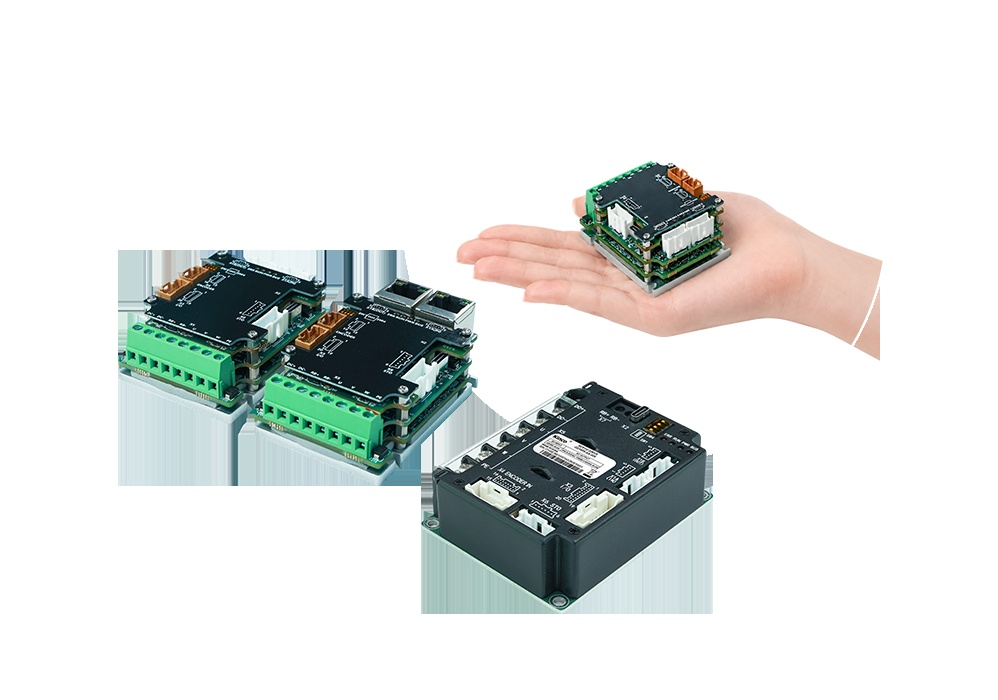
Choosing an integrated servo actuator manufacturer affects machine performance, service needs, and project costs. A compact unit can simplify installation, but integration alone does not prove suitability. Assess application fit, documentation, controls compatibility, quality processes, and after-sales support before comparing quotations.
- Match the Product to the Application
Define where the actuator will operate and what motion it should deliver. A robotic joint, linear axis, and mobile robot wheel have different requirements. Specify load, speed, acceleration, travel or wheel diameter, mounting space, duty cycle, and required precision.
Then confirm that the supplier’s product category matches the application. For automated guided vehicles (AGVs) and autonomous mobile robots (AMRs), a complete AGV drive wheel can be more relevant than a conventional rotary actuator because it combines drive components with the wheel that contacts the floor.
- Examine What Is Integrated
The phrase “integrated servo actuator” can describe different combinations of motor, drive electronics, feedback, transmission, brake, or mechanical output. Request a component breakdown instead of assuming every supplier includes the same functions. Integration can reduce cabling and mounting work, but service access and troubleshooting still matter.
For mobile-robot applications, the iWMC module from Kinco Automation integrates the drive, motor, gearbox, and wheel into one unit. Designed for wheeled mobile robots, AGVs, and AMRs, it should be assessed against chassis drawings and required functions.
Ask whether engineering support is available to review mounting, cable routing, and controller compatibility during prototype development.
- Verify Performance at the Required Duty Cycle
Compare continuous and peak performance, not maximum speed alone. Torque, motor power, reduction ratio, current, acceleration, braking frequency, and heat all influence operation. Calculate loads across the route, including starts, turns, gradients, stops, and repeated shifts.
A reliable supplier provides model-specific data and explains its ratings. Ask which figures apply to continuous service and which are momentary limits. If loads vary, verify every operating case against the drive’s permitted range instead of designing around the lightest load.
Test a representative load and route where possible, observing stopping behavior, traction, temperature, and fault recovery before fleet deployment.
- Check Controls and Electrical Compatibility
Confirm supply voltage, logic power, communication protocol, connectors, input/output functions, feedback signals, and configuration tools. The actuator must communicate with the machine controller within its electrical limits. Protocol or wiring differences can add commissioning time even when the mechanical design fits.
The iWMC supports common fieldbus and serial communication options, with supply ratings listed per configuration. Check the selected model’s specifications, wiring diagram, and firmware requirements. Ratings and interfaces can differ by configuration.
- Review Safety and Environmental Limits
Request clear information about protective functions, braking, temperature limits, ingress protection, and installation conditions. For mobile equipment, also review the vehicle-level risk assessment, emergency stopping strategy, and how maintenance personnel isolate energy. A component’s protective functions do not replace the machine builder’s responsibility for system safety.
The iWMC range includes configurations with and without Safe Torque Off (STO). Brake availability also depends on the selected model, with the A and B designations indicating versions without and with a brake, respectively. Check the complete ordering code and corresponding specifications before designing the safety circuit.
Environmental ratings, including ingress protection and operating temperature, are listed in the product specification table. Check these limits against the actual site, cleaning method, humidity, and temperature.
- Assess Quality and Product Consistency
Ask how products are inspected, how revisions are controlled, and whether production batches are traceable. Useful evidence includes test procedures, inspection records, relevant certifications, and clear technical change notices. These details help buyers assess consistency beyond catalogue claims.
Request drawings, installation instructions, parameter lists, and maintenance guidance before finalizing the design. Complete documentation simplifies assessment, integration, commissioning, and fleet support. For custom projects, ask how special configurations are handled and validated before production approval.
- Consider Service and Lifecycle Cost
Purchase price is only part of total cost. Estimate installation labor, wiring, commissioning, spares, maintenance, wear, and downtime. Integration can reduce component count, but its value depends on reliability, service access, replacement time, and available technical support.
Ask how faults are diagnosed, which parts can be replaced, and how the supplier supports engineers during integration. Response arrangements and spare-part lead times matter when equipment runs across multiple shifts. Compare quotations against the same performance, documentation, warranty, and support requirements so that a lower initial price does not hide added operating expense.
Clarify how product revisions, firmware updates, and spare-part availability are communicated throughout the equipment’s service life.
Choose Against a Defined Checklist
The right manufacturer supplies application-matched options, verifiable data, compatible interfaces, installation guidance, and post-delivery support. A written checklist gives purchasing and engineering teams a consistent basis for comparing suppliers and reducing changes during commissioning.
For mobile robot designs, the iWMC integrated servo wheel module can be assessed against payload, route, controls, safety, and service needs. A suitable integrated servo actuator or wheel module should fit its full role in the machine, not simply offer a high level of integration.