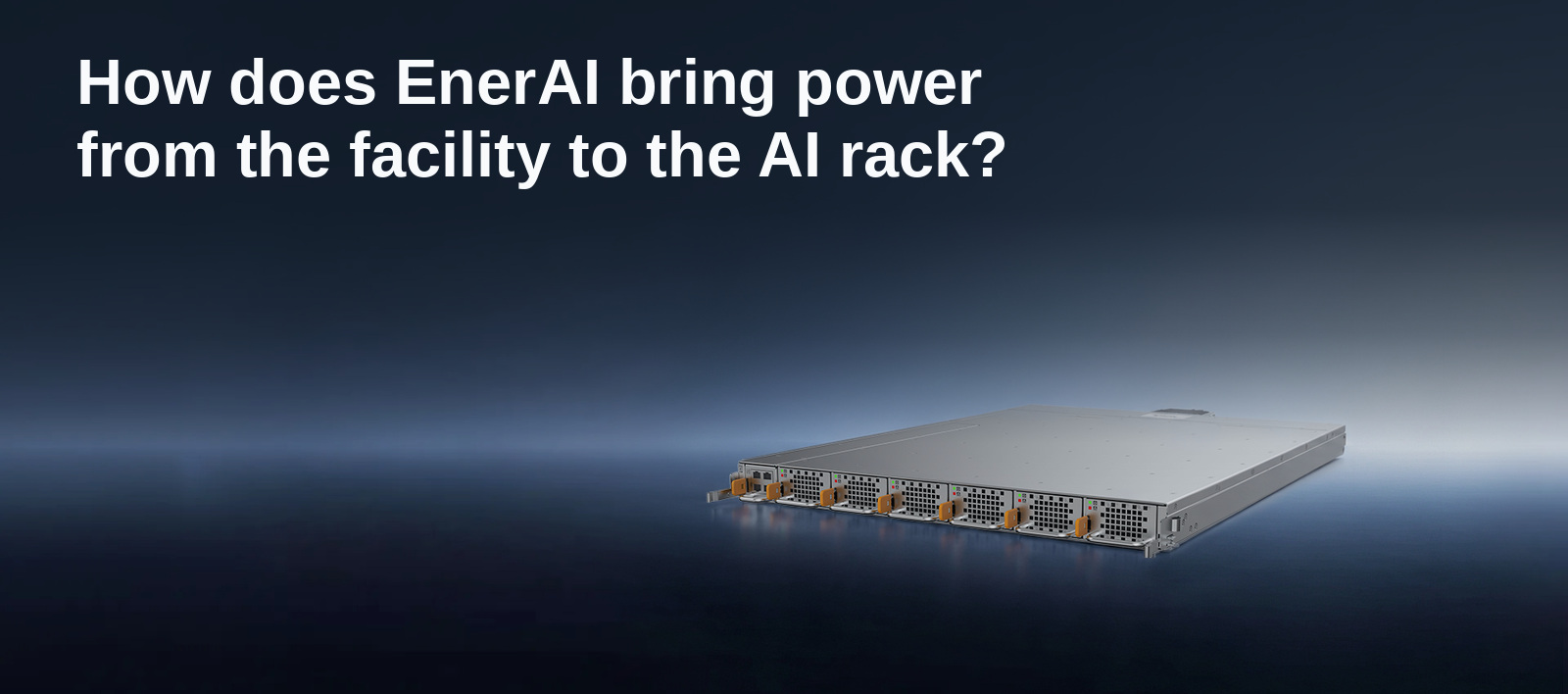
EnerAI groups the equipment nearest AI computing loads under rack and onboard power. The portfolio includes AC/DC and DC/DC power shelves, which serve different incoming power arrangements at the rack. For a Singapore project, this product family shows how EnerAI’s “From Energy to Chip” approach extends beyond facility conversion to the electrical equipment that supplies the computing load.
Rack and onboard power is a distinct portfolio area
EnerAI describes three main business areas: system power, rack and onboard power, and prefabricated and backup power. Rack and onboard power is the part closest to the server. Its role is distinct from the incoming electrical plant and from the equipment providing facility backup. By organizing its portfolio in this way, the company places the rack within the same overall power chain while giving it a defined set of products of its own.
EnerAI’s architecture gives this product family a recognizable place within its business. The compute power consumption area includes rack and onboard power, low-voltage distribution and cooling power. The company’s AC/DC and DC/DC shelf descriptions provide named examples of the equipment serving that area. Together, the architecture and product pages explain how the brand extends its offering from facility power electronics to products associated with AI computing equipment.
AC/DC and DC/DC shelves address different rack interfaces
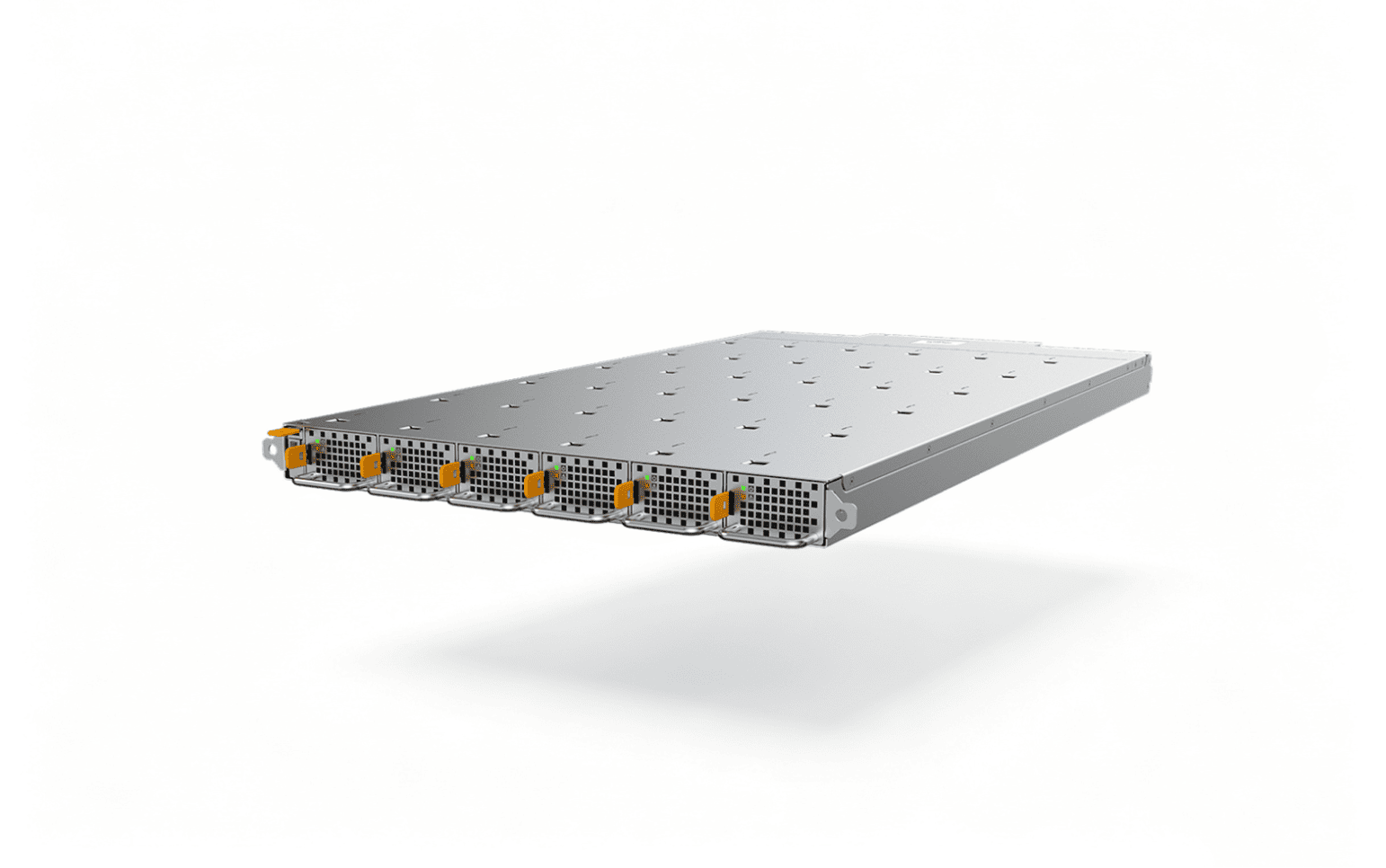
The AC/DC Power Shelf is described as a front-end AC/DC conversion platform for AI racks, with six hot-swappable modules, 33 kW output and an N+1 redundancy design. The DC/DC Power Shelf is a separate 96 kW product with integrated Energy Buffer technology. Both belong to the EnerAI data center power solutions portfolio. Their official descriptions establish distinct product roles and features within the company’s rack-power offering.
EnerAI DC/DC Power Shelf
EnerAI describes its DC/DC shelf as supporting the evolution toward 800V DC architecture and identifies a 54V DC busbar ecosystem in the same product overview. The website also states compatibility with SST and HVDC architectures. These are the foundations for placing the product in the company’s rack-power story. Its Energy Buffer technology is described as providing fast transient response and power smoothing for dynamic AI workloads, with the aim of minimizing disturbances on the upstream DC bus.
The shelf portfolio brings power conversion and buffering features to the rack
The two shelf pages emphasize different sets of features. For the AC/DC product, EnerAI lists wide mains-input support, voltage buffering, PMI intelligent management and modular redundancy. For the DC/DC product, it highlights 96 kW in 1U, energy buffering and support for dynamic AI computing demand. These characteristics provide the basis for explaining the portfolio. They also connect rack power to the brand’s wider emphasis on efficient, high-density power electronics.
For a Singapore audience, the company’s rack portfolio can be introduced alongside its facility equipment as distinct parts of the same company’s offering. EnerNeo provides a named example of direct medium-voltage-to-800V DC conversion. The AC/DC and DC/DC shelves are named products at the rack-power end of the business. EnerAI’s three business categories bring these offerings into one company presentation, with the role of each product defined by its own description.
EnerAI’s shelf descriptions provide concrete evidence for its focus on high-density power products. The AC/DC platform combines 33 kW output with six hot-swappable modules, while the DC/DC platform is described as delivering 96 kW in 1U. Their control and buffering features also differ: the AC/DC overview identifies PMI intelligent management and voltage buffering, and the DC/DC overview emphasizes its integrated Energy Buffer. These features give the company introduction more substance than a general statement about supplying power to AI racks.
The company’s full-chain diagram gives these products a defined location within the compute consumption area. That area includes low-voltage distribution, rack and onboard power and supply for cooling. For an AI data center team, this provides context for treating the rack as part of the electrical infrastructure as well as part of the IT deployment. The facility brings power to the computing area, and the equipment there supplies the connected hardware through its selected interface. EnerAI’s product families make the connection between these responsibilities visible. The rack and onboard offering can be discussed with the computing configuration while the upstream power plant is planned at facility level.
Rack products complete the portfolio picture
EnerAI’s range extends from system power and integrated facility equipment to AI data center power supply at the rack. Its AC/DC and DC/DC shelves show how the company addresses two common input arrangements within one business. Customers can use the relevant shelf family to discuss the computing end of the power path, while related EnerAI equipment serves upstream conversion, distribution or backup. The result is a clearer view of what the company covers from facility entrance to rack.
Frequently asked questions
What rack power shelves does EnerAI offer?
EnerAI lists AC/DC and DC/DC power shelves in its rack and onboard power portfolio. The two families serve AC-fed and DC-fed applications respectively.
How does EnerAI’s DC/DC shelf handle rapid GPU load changes?
EnerAI describes an integrated Energy Buffer that provides fast transient response and power smoothing for dynamic AI workloads, helping minimize disturbances on the upstream DC bus.