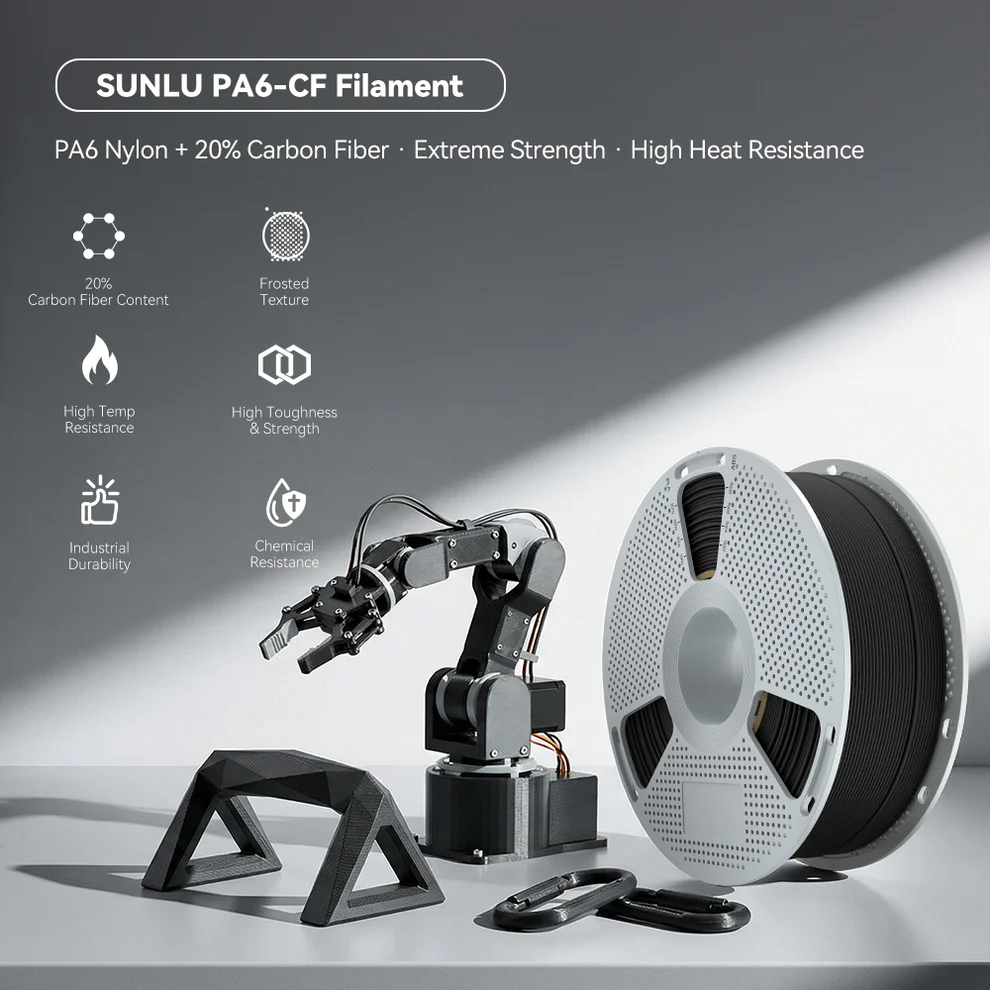
Choosing the right engineering polymer is crucial when designing durable components for mechanical projects. While standard thermoplastics have served makers for years, high-performance composite blends can provide higher stiffness and strength than some unfilled thermoplastics for functional desktop manufacturing.
Comparing advanced polyamide composites against traditional engineering plastics helps designers determine optimal material choices. Evaluating tensile strength, thermal resistance, and processing difficulty ensures your finished prototypes withstand rigorous real-world operating loads.
Understanding ABS in Traditional Prototyping
Acrylonitrile Butadiene Styrene has long served as a staple thermoplastic for functional prototyping and injection-molded enclosures. It offers decent impact resistance, easy post-processing with acetone, and affordable pricing for everyday hobbyist projects.
However, printing standard ABS presents notable challenges on open-frame machines. High thermal shrinkage causes severe corner warping and layer splitting when cooling occurs too rapidly in ambient workshop environments without proper enclosures.
Furthermore, basic ABS lacks the extreme tensile modulus required for heavy load-bearing brackets or high-stress mechanical gears. Under continuous physical strain, unreinforced parts eventually deform, stretch, or fracture along layer boundaries.
What Is PA6-CF Filament?
Polyamide carbon fiber composite materials integrate chopped carbon micro-strands into a tough nylon polymer matrix. This advanced formulation creates an interconnected internal reinforcement network that dramatically elevates overall mechanical performance.
The embedded fibers restrict polymer movement during cooling, reducing shrinkage and improving dimensional stability compared with unreinforced polymers. Printed objects achieve exceptional dimensional stability, tight tolerances, and high structural rigidity across complex geometries.
Spools engineered by SUNLU provide uniform fiber dispersion and strict diameter tolerances. This specialty filament is designed for functional parts that require higher stiffness, strength, and dimensional stability than many unfilled desktop materials.
Tensile Strength and Load-Bearing Rigidity
When evaluating structural strength, composite polyamide vastly outperforms traditional ABS plastics under heavy mechanical loads. PA-CF delivers exceptional tensile modulus and flexural rigidity, allowing structural frames to resist bending under extreme force.
While ABS flexes and yields under intense physical stress, carbon-reinforced nylon maintains exact geometric alignment. This high rigidity prevents mechanical components from shifting, vibrating, or losing alignment during high-speed operational cycles.
Consequently, engineers choose composite materials for demanding applications like robotic arms, motor mounts, and structural brackets where high stiffness and limited deformation under load are important for successful operation.
Impact Resistance and Durability under Shock
Impact performance represents another critical differentiator when comparing these engineering polymers against each other. Traditional ABS provides decent shock absorption, making it suitable for protective casings that experience minor drops or impacts.
In contrast, using a reliable PA-CF composite combines the inherent toughness of nylon with rigid carbon reinforcement. This unique hybrid structure absorbs sudden mechanical shock effectively while resisting permanent deformation, cracking, or catastrophic structural failure.
Components extruded from reliable SUNLU spools endure repeated physical stress and cyclic fatigue much longer than standard thermoplastics, ensuring maximum longevity in active mechanical tools and workshop fixtures.
Thermal Resistance and Operating Environments
Operating temperature thresholds limit where standard polymers can be deployed safely. Standard ABS softens around 85°C, making it unsuitable for automotive engine bays, heated enclosures, or industrial machinery environments.
Conversely, carbon-reinforced polyamide exhibits remarkable thermal endurance under continuous load. SUNLU PA6-CF has a heat deflection temperature of 203±3°C under the specified test conditions, indicating strong resistance to deformation under elevated temperatures.
Utilizing premium composite materials allows hobbyists and professionals to fabricate custom high-temperature ducts, mounting brackets, and functional enclosures for applications that require higher thermal resistance.
Printability, Warping, and Enclosure Demands
Processing requirements dictate how easily a material transitions from digital design to physical reality. ABS demands a heated enclosure to minimize warping, alongside adequate room ventilation to manage chemical fumes during extrusion.
Printing specialty filaments also requires specific hardware configurations, including hardened steel nozzles to resist abrasive fiber wear. However, carbon reinforcement greatly suppresses thermal warping on the build plate compared to unreinforced engineering plastics.
Properly configuring slicer parameters ensures smooth layer bonding and clean overhang performance. Sourcing verified SUNLU inventory guarantees predictable volumetric flow rates throughout lengthy engineering print runs.
Moisture Sensitivity and Post-Processing Care
Environmental vulnerability differs significantly between these two polymer categories. ABS resists moisture absorption well and bonds smoothly using acetone vapor smoothing, but it lacks solvent resistance against oils and greases.
Meanwhile, composite polyamide is hygroscopic and requires thorough pre-drying before extrusion to prevent internal steam bubbles. Despite this storage requirement, PA-CF offers superior chemical resistance against industrial solvents and automotive fluids.
Keeping your specialty filaments inside sealed dry boxes ensures optimal layer cohesion. Practicing proper moisture management help preserve maximum mechanical strength for every functional prototype you produce.
Final Verdict: Which Material Wins?
Choosing between these engineering materials depends entirely on your project’s mechanical and thermal demands. ABS remains a budget-friendly option for general enclosures, decorative housings, and basic hobbyist models requiring easy post-processing.
However, when your application demands maximum structural rigidity, extreme heat tolerance, and heavy load-bearing capacity, for functional parts that prioritize stiffness, strength, and high-temperature performance, PA6-CF is generally the more suitable option.
By sourcing high-grade spools from SUNLU, PA6-CF can expand the range of functional parts that compatible desktop 3D printing systems can produce.