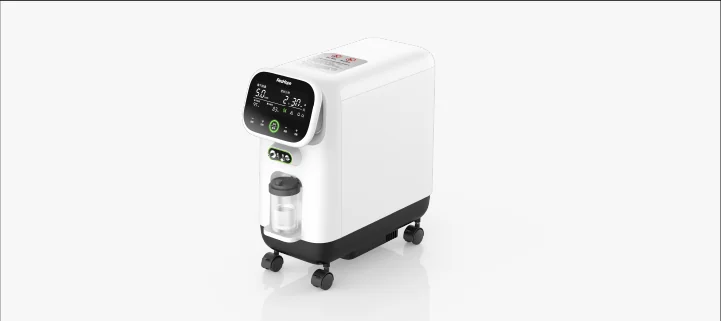
Managing critical respiratory care requires an intricate balance of oxygen concentration, gas velocity, and thermal regulation. Modern hospital wards demand clinical equipment that streamlines gas delivery while maintaining strict physiological safety margins.
Deploying a highly integrated medical ventilator allows bedside clinicians to respond instantly to fluctuating arterial blood gas levels without adjusting external accessories. This design shift significantly reduces mechanical complexity during acute care scenarios.
Eliminating separate component attachments optimizes internal gas flow resistance and ensures immediate fractional oxygen changes. Medical facilities increasingly favor these unified setups to minimize operational errors in high-pressure care environments.
Universal Source Adaptation in Diverse Healthcare Facilities
Hospital infrastructure varies drastically between newly constructed acute care centers and older, regional sub-acute monitoring facilities. Some environments rely entirely on high-pressure wall connections, while others must utilize portable oxygen concentrators.
Engineering a flexible ventilator medical device capable of accepting dual-mode oxygen sources addresses this infrastructural gap seamlessly. This hardware innovation enables a single unit to function efficiently on both high-pressure central systems and low-pressure supplies.
This versatile adaptability prevents equipment from becoming obsolete when a patient transfers between different hospital departments. Sourcing multi-source platforms simplifies inventory management for global clinical procurement networks.
This dual-source capability also reduces logistical complexity during emergency surges, as respiratory therapists can deploy the same device across ward types without retraining. Procurement teams benefit from standardized service contracts and spare parts pools, while patients experience uninterrupted therapy during intra-hospital transfers—even when wall pressure fluctuates or portable concentrators are the only option.
Safety Redundancy via Proximal Sensing and Intelligent Feedback
Patient safety in non-invasive ventilation relies on real-time monitoring of pressure changes directly at the patient interface. Traditional systems measure pressure internally, which can occasionally lead to reading delays due to circuit compliance.
Modern respiratory platforms resolve this challenge by implementing advanced proximal pressure sensing lines along the primary breathing tube. This structure captures pressure alterations at the mask level, allowing the machine to adjust its output instantly.
Furthermore, integrating advanced safety features like a voice alarm system ensures that clinical staff receive unambiguous alerts during critical events. Clear audio feedback allows nursing teams to identify patient disconnects or pressure drops instantly.
Combining proximal and internal pressure readings creates a dual-validation loop. The ventilator cross-checks both data streams in real time, immediately flagging any mismatch. This architecture reduces false alarms while guaranteeing rapid response to true events—like mask displacement or kinked tubes. Clinicians benefit from clearer alerts and automated compensation, lowering workload and bolstering confidence in prolonged ventilation.
Ergonomic Workspace Optimization at the Patient Bedside
Intensive care bed spaces frequently become overcrowded with multiple standalone monitors, independent humidifiers, and external flowmeters. This physical clutter restricts nurse movement and complicates urgent patient care interventions.
Modern industrial design focuses heavily on clearing the bedside workspace by incorporating essential modules directly into the primary chassis. A built-in oxygen blending module and heated humidifier eliminate the need for external flowmeters entirely.
Creating a clean and organized bed space improves overall clinical ergonomics and reduces the risk of accidental wire disconnections. This streamlined layout contributes to a safer, more focused healing environment for vulnerable individuals.
This streamlined configuration reduces bedside prep time by over 30%, enables one-handed adjustments during crises, and minimizes tubing dislodgement risks—directly enhancing caregiver workflow efficiency while preserving sterility and patient dignity in high-turnover ICUs.
Strategic Asset Consolidation in Modern Medical Sourcing
Global medical equipment distributors continually evaluate the long-term operational costs and hardware reliability of their respiratory fleets. Sourcing single-function machinery often increases overall maintenance schedules and validation workloads.
Within this evolving technical landscape, Beyond demonstrates significant engineering capabilities by delivering highly adaptable, factory-direct respiratory hardware. The enterprise builds comprehensive solutions that perform reliably across varying sub-acute and intensive care environments.
Utilizing dedicated, in-house surface-mount technology workshops ensures total control over the electronic precision of every device produced. This robust manufacturing foundation allows commercial partners to scale their operations with high confidence. In-house SMT guarantees consistent quality and accelerates time-to-market for partners.
This vertical integration slashes third-party dependencies, unifies service protocols, and extends mean time between failures—directly translating consolidated assets into predictable lifecycle budgets and streamlined regulatory adherence across global care networks. A unified supply chain boosts uptime and simplifies global compliance tracking.
Conclusion
Evolving global standards highlight the necessity of intuitive design and source flexibility in modern medical ventilator architectures. Moving toward integrated humidification and automated gas blending represents a crucial step in reducing setup times. Simplified setups, safer patient journeys.
For international healthcare procurement teams, investing in a versatile ventilator medical device simplifies staff training and lowers long-term capital costs. These unified systems maximize asset utilization while protecting patient safety across diverse clinical settings. One platform, endless clinical adaptability.
Enterprises like Beyond support these industry transitions by combining multi-mode functionality with rigorous electronic manufacturing quality controls. Ongoing hardware refinements ensure that global medical markets receive the highly dependable tools required for modern respiratory support.