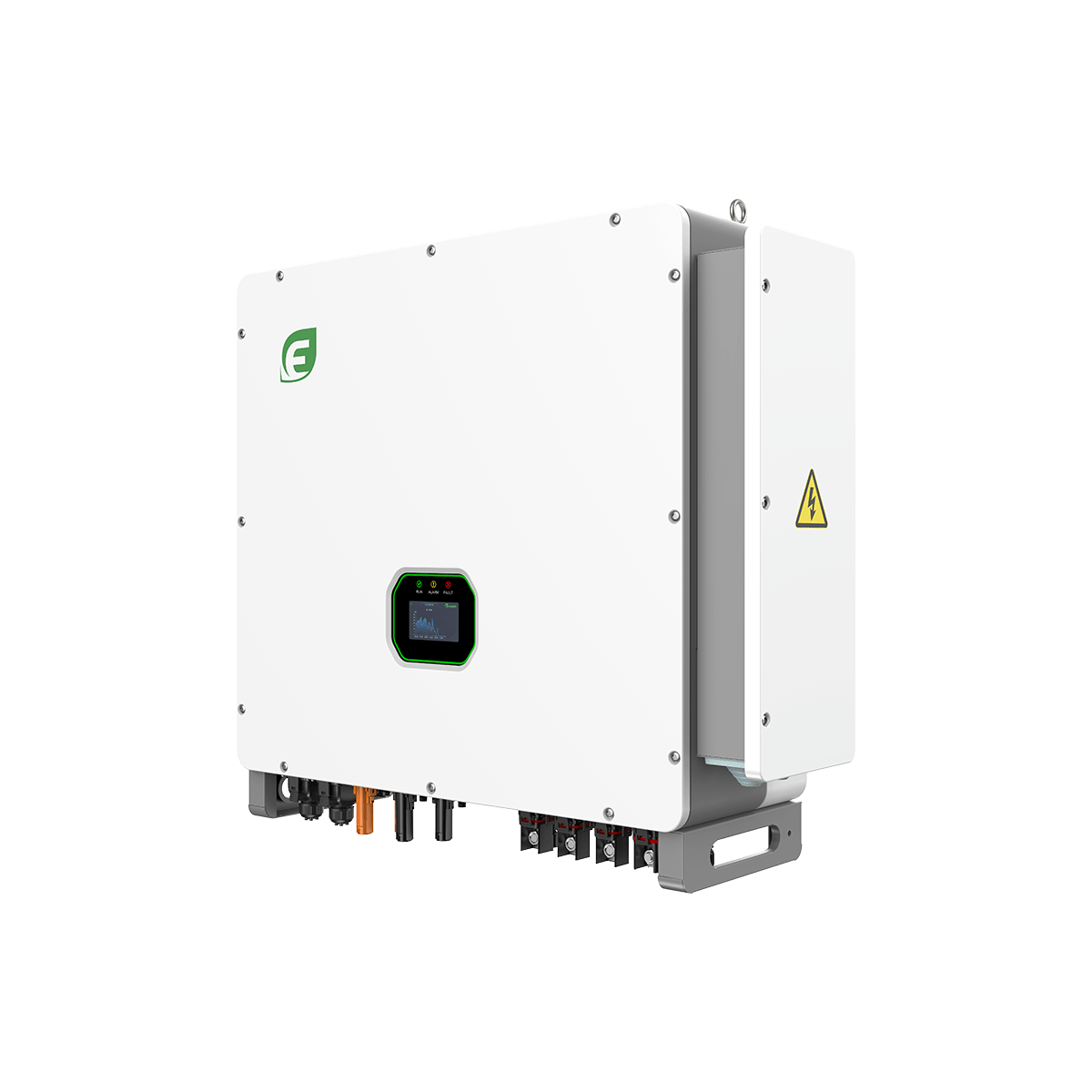
Designing medium-scale solar and energy storage infrastructure requires careful evaluation of power conversion capacity, grid interconnection codes, and load profiles. Selecting a commercial PV hybrid inverter enables plant managers to link solar arrays and battery storage directly to three-phase commercial switchgear, streamlining energy conversion steps across daily production cycles.
Focusing on medium-to-large commercial power electronics, Enjoypowers manufactures scalable hybrid conversion hardware engineered for demanding outdoor operational environments. Supported by dedicated in-house research and development, custom engineering flexibility, validated system stability, and responsive global technical service, the organization provides comprehensive technical reviews for commercial project developers.
Matching Power Conversion Ratings to Commercial Facility Demand Curves
Selecting conversion capacity for commercial solar-plus-storage projects requires analyzing 15-minute interval utility load data to identify peak kilowatt draws. Deploying a 75 kW hybrid inverter unit offers an ideal baseline capacity for medium-scale commercial facilities, allowing site managers to buffer transient load spikes and execute daily time-of-use tariff arbitrage strategies.
Matching converter ratings precisely to site demand prevents capital over-investment while maintaining adequate headroom for dynamic load variations. Balanced power sizing supports continuous operational stability across commercial switchgear networks.
Architecture and Versatility of Outdoor High-Power Hybrid Platforms
Consolidating photovoltaic input, battery management, and dual-mode AC output within a single weatherproof enclosure simplifies physical installation across commercial sites. Utilizing the 75-125 kW PV+battery hybrid inverter spanning six standardized configurations allows system integrators to adapt conversion hardware to specific project power demands ranging from 75 kW to 125 kW.
Engineered with an IP66 rating, this outdoor platform operates reliably across commercial rooftops, remote microgrids, and harsh industrial environments. High-power density combined with multi-mode capability eliminates the need for separate indoor equipment rooms.
Solar Capacity Overhead and Maximum Power Point Tracking Optimization
Commercial solar arrays frequently feature oversized direct-current capacity relative to inverter alternating-current output to maximize morning and late-afternoon energy yield. Selecting a high-capacity commercial PV hybrid inverter supporting up to 250 kWp maximum PV input allows facility planners to maximize solar energy harvesting without adding extra conversion hardware.
Multiple independent MPPT tracking channels optimize energy capture across complex commercial rooftop layouts subject to variable tilt angles or partial shading. Granular solar array tracking enhances daily kilowatt-hour generation across all weather conditions.
Efficiency Benchmarks and Thermal Performance in Heavy-Duty Enclosures
High conversion efficiency across variable loading conditions is critical for minimizing internal heat generation and preserving multi-year component longevity. Reaching maximum efficiency of 97.8%, modern three-phase hybrid conversion hardware reduces internal energy losses during continuous full-power charge and discharge cycles.
Advanced thermal management channels dissipate internal heat efficiently within rugged IP66-rated enclosures, maintaining stable operational performance under high ambient outdoor temperatures. High efficiency lowers ongoing cooling demands and extends operational lifespan.
Grid-Tied Synchronization and Multi-Mode Operational Flexibility
Commercial power conditioning equipment must comply with regional grid codes, providing active voltage and frequency regulation during feeder disturbances. A modern 75 kW hybrid inverter manages active and reactive power components dynamically, stabilizing primary site busbars during utility voltage sags.
Flexible operational modes enable automated switching between self-consumption optimization, demand charge reduction, time-of-use shifting, and emergency backup power delivery. Automated mode management maximizes economic returns while preserving continuous facility operations.
Securing Uninterrupted On-Grid and Off-Grid AC Output
Utility disruptions and voltage blackout events present significant operational hazards to automated production lines and sensitive computing hardware. Integrated static transfer switching logic enables hybrid conversion platforms to transition critical facility loads from on-grid to islanded off-grid mode in under 10 ms.
Continuous voltage regulation during grid loss prevents automated control systems from resetting, preserving manufacturing output. Autonomous off-grid operation allows remote microgrids and commercial facilities to maintain essential functions continuously during extended utility outages, subject to solar generation and battery capacity.
Battery Interface Engineering and System Safety Protocols
Connecting lithium iron phosphate or nickel manganese cobalt battery racks to high-power hybrid converters requires closed-loop digital communication with the local Battery Management System. Continuous exchange of voltage, current, and state-of-charge telemetry allows the converter to modulate charging power dynamically, preventing cell overcharging or deep discharge.
Integrated DC and AC circuit protection devices isolate electrical faults instantly before damage spreads across connected battery racks or internal power electronics. Robust protection protocols maintain system safety across thousands of operational charge cycles.
Modular Integration and Parallel System Expansion
Expanding commercial solar-plus-storage projects over time demands flexible hardware architectures that accommodate modular expansion. Connecting multiple hybrid units in parallel allows facility engineers to scale total site conversion capacity incrementally as facility power demands increase over multi-year operational horizons.
Standardized cabinet form factors optimize physical footprint inside constrained utility yards or commercial equipment areas. Modular expansion choices preserve upfront capital while retaining prospective site growth options.
System Selection Parameters for Commercial Project Developers
Evaluating hybrid conversion hardware for commercial developments requires assessing DC-to-AC power ratios, enclosure protection ratings, communication compatibility, and global grid code compliance. Sizing a 75 kW hybrid inverter alongside prospective battery capacity ensures that the storage system delivers intended peak-shaving and backup benefits reliably.
Collaborating with established hardware manufacturers simplifies regulatory approval and site commissioning procedures. Comprehensive technical evaluation prior to equipment selection secures long-term return on investment across commercial energy assets.
Conclusion
Sizing three-phase hybrid conversion platforms for commercial systems demands balancing solar array capacities, battery discharge rates, and facility peak load profiles. Implementing a commercial PV hybrid inverter provides high conversion efficiency, robust outdoor protection, and seamless multi-mode operational flexibility for commercial and industrial facilities.
Equipment engineered by Enjoypowers delivers reliable power conditioning backed by independent internal R&D, flexible product customization options, tested system stability, and responsive global technical support. Project developers, system integrators, and facility engineers are invited to contact technical support specialists to receive detailed product specifications and request customized technical proposals.