Industrial facilities no longer interact with electricity only as passive consumers. Production schedules, variable tariffs, on-site generation, backup requirements, demand limits, and grid-service opportunities can all change the way power moves through a site during the day. Industrial grid energy solutions are the collection of storage, control, conversion, and coordination functions used to manage those changing conditions.
In practice, the question is whether those functions can coordinate energy flows as site priorities change during normal operation and grid disturbances.
A Grid Solution Begins With Coordinated Site Assets
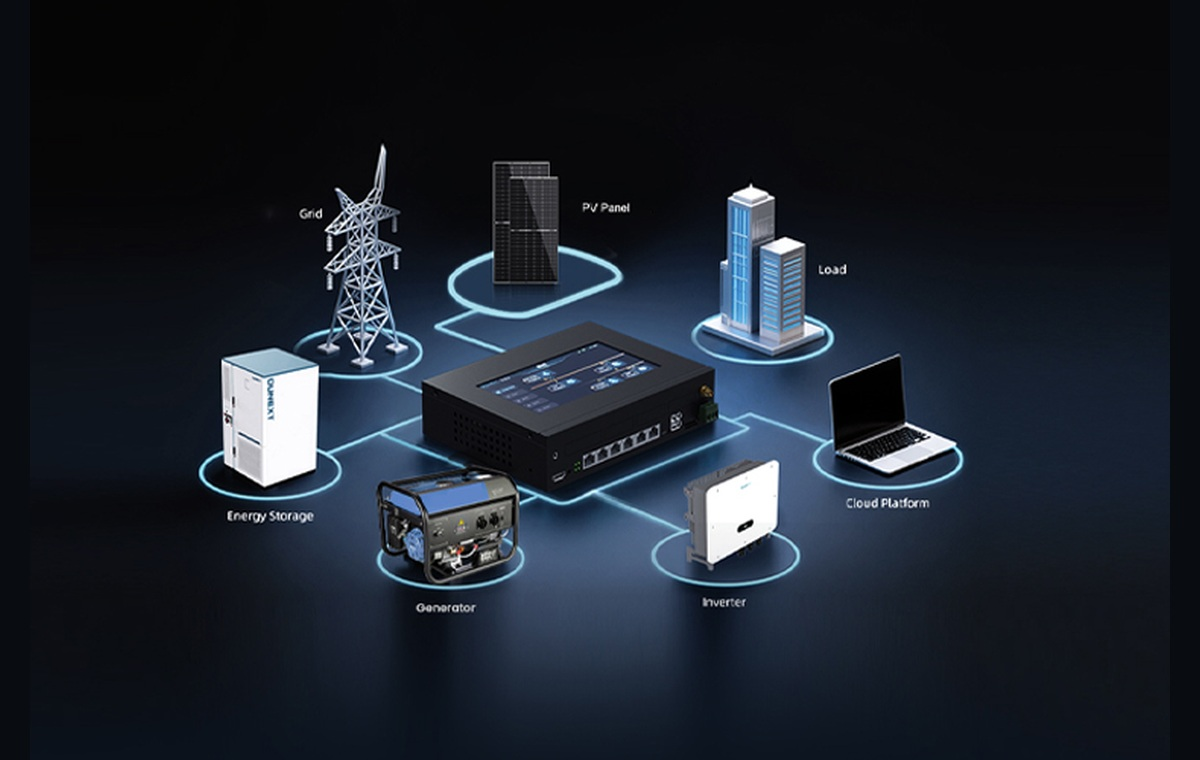
An industrial energy system may include the utility connection, photovoltaic generation, inverters, battery storage, diesel generators, critical loads, and ordinary production loads. These assets have different operating characteristics, so the central technical challenge is coordination.
Commercial and industrial energy storage can absorb energy when conditions favor charging and return it when site demand, electricity pricing, or continuity requirements make discharge more valuable. Storage becomes part of a broader site-control structure rather than an isolated battery installed beside the building.
The term industrial grid energy solutions therefore describes more than hardware capacity. A useful solution needs visibility into site conditions and a control strategy that decides how available assets should respond. If generation rises while demand falls, the operating priority may be charging. If demand approaches a costly peak, discharge may become more useful.
During a grid interruption, the priority can shift again toward maintaining selected loads. The value lies in being able to change operating mode without redesigning the site each time conditions change.
Operational Reliability and Energy Management Share the Same Platform
Factories and industrial parks often have loads that cannot tolerate long interruptions, yet backup power is only one part of the problem. The same battery that supports continuity can also participate in routine energy management during normal grid operation.
Commercial and industrial energy storage may be dispatched for peak shaving, load shifting, or demand response while maintaining enough stored energy for defined backup requirements. That creates a scheduling problem: using the battery aggressively for daily savings must be balanced against keeping sufficient capacity available for resilience.
This is where industrial grid energy solutions matter operationally. Their purpose is to turn competing objectives into a managed set of priorities. Critical loads can be separated from less essential consumption, charging windows can be aligned with site conditions, and dispatch can be adjusted as load patterns change.
A well-organized system is not permanently locked into “saving cost” or “providing backup.” It can move between those roles according to the operating rules established for the facility.
Digital Coordination Determines How Flexible the Site Becomes
The larger the site, the more difficult it becomes to manage batteries and other distributed equipment through separate interfaces. A unified energy-management layer can bring status data, alarms, dispatch commands, and device coordination into one operating view. Within Dunext’s C&I architecture, the EMS acts as the site-level dispatch layer across storage and other compatible power assets.
In that context, commercial and industrial energy storage becomes one controllable resource inside the site rather than a standalone system that cannot respond to the rest of the electrical environment.
Dunext also uses the DuLink platform for centralized monitoring, remote maintenance, proactive warning, and diagnostics. Those functions give industrial grid energy solutions a digital operating layer that extends beyond initial commissioning.
Remote visibility is particularly relevant when several systems are deployed across a facility or multiple sites, because abnormal conditions can be identified without relying only on local inspection. The technical significance lies in connecting data, maintenance, and dispatch decisions over the equipment’s working life.
Capacity and Switching Performance Must Fit the Facility
Industrial sites vary widely in scale, from smaller commercial loads to large parks with multi-megawatt demand. A fixed-size architecture would force some projects into excessive capacity and leave others without room to expand. Across its PowerHill, PowerRock, and PowerMount families, Dunext lists deployment capacities from 20 kWh up to 20 MWh.
That range illustrates why commercial and industrial energy storage is often organized in multiple capacity tiers: the storage plant can be matched more closely to the duty of the site instead of being treated as one standard package.
Continuity requirements create another performance dimension. Dunext specifies on/off-grid switching in less than 20 ms for critical-load support. Fast transfer is relevant where a facility needs the storage system to bridge a grid disturbance without a lengthy interruption. In broader industrial grid energy solutions, however, transfer time is only one criterion.
Available energy, power capability, protection coordination, control logic, and the definition of which loads are truly critical all determine whether backup behavior will match the operating requirement.
Industrial grid management matters because it gives facilities a way to treat electricity as a controllable operational resource. Storage can shift energy in time, control software can coordinate different assets, and rapid transfer can support continuity when the grid is unavailable.
Dunext’s six protection layers, flexible sizing, site-level dispatch, backup capability, and DuLink management functions show how those functions can be combined in a C&I architecture. The broader principle is that an industrial energy system gains value when reliability, energy cost, and grid interaction are managed as connected operating problems rather than as separate projects.