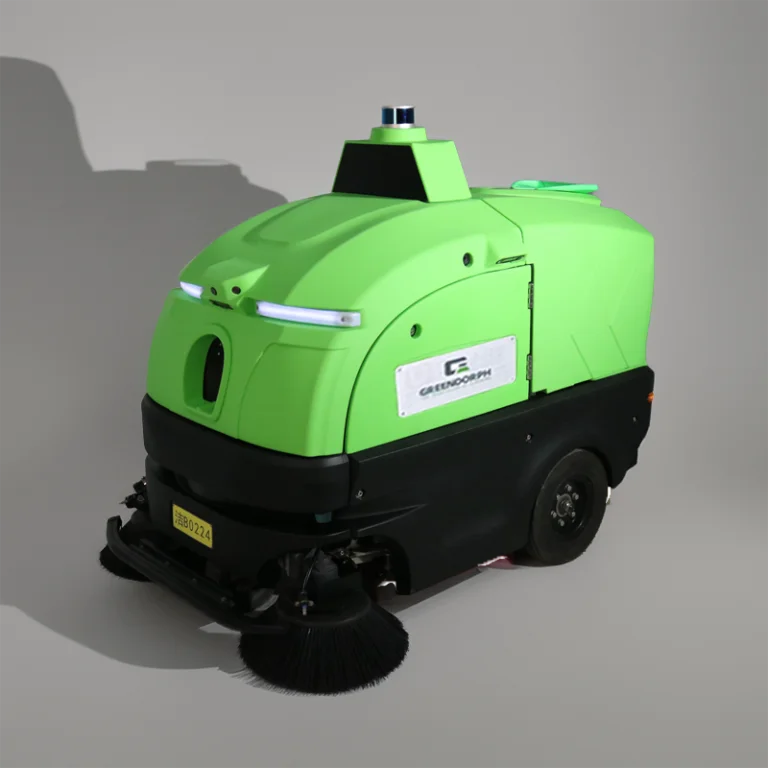
As we navigate the operational landscape of 2026, the global outlook for parking lot maintenance is being fundamentally reshaped by a shift toward autonomous, zero-emission technology. A reliable parking lot sweeper is no longer viewed as a simple mechanical tool but as a critical node in a smart city’s infrastructure. Facility managers are increasingly moving away from high-maintenance internal combustion engines in favor of 100% electric platforms that can operate during “pre-dawn” hours without violating noise ordinances. This evolution is driven by the urgent need to address the global labor shortage in the sanitation sector while meeting stringent ESG (Environmental, Social, and Governance) targets. By adopting advanced power sweepers for parking lots, organizations can ensure their facilities remain pristine, safe, and compliant with modern environmental standards.
Technical Breakthroughs in Autonomous Navigation
The hallmark of a modern parking lot sweeper in 2026 is its ability to operate with full autonomy in complex, dynamic environments. Leading manufacturers like Greendorph have pioneered full-stack R&D solutions that integrate LiDAR, ultrasonic sensors, and high-definition cameras to provide 360-degree environmental perception. This allows the machine to perform flexible obstacle avoidance, safely navigating around parked vehicles, pedestrians, and shopping carts. According to the Greendorph product specifications, models like the YJ130 utilize “Planned Path Sweeping” algorithms that optimize cleaning routes, reducing energy consumption and repetitive coverage. This intelligent navigation ensures that even the most irregularly shaped parking structures receive comprehensive, edge-to-edge cleaning without the need for constant human oversight.
Maximizing Efficiency with 100% Electric Propulsion
One of the most significant trends in the 2026 outlook is the industry-wide transition to 100% electric power for all industrial cleaning tasks. The core mission of the “electric cleaning revolution” is to replace carbon-heavy machinery with sustainable alternatives that do not sacrifice performance. High-performance power sweepers for parking lots are now equipped with robust 48V/200 AH Lithium (LFP) batteries, which provide an average continuous operating time of six to eight hours. This endurance allows for a full shift of cleaning across large industrial campuses and transit hubs on a single charge. As highlighted on the Greendorph official website, these machines achieve a cleaning efficiency of over 95%, utilizing 3000W motors to effortlessly collect dust, cigarette butts, and larger industrial debris while producing zero CO2 emissions.
Integrated Multi-Functional Cleaning Systems
Reliability in a parking lot sweeper is now defined by its versatility and its ability to handle various types of waste in a single pass. Modern units are designed as multi-functional platforms that combine primary mechanical sweeping with advanced auxiliary systems. For instance, the YJ130 series features a triple-threat system comprising negative-pressure suction, airflow-assist, and atomized misting spray. This combination is essential for parking lot environments where fine dust can be just as problematic as bulky trash. The misting function settles airborne particulates, preventing them from settling on parked vehicles or being inhaled by pedestrians. This high-efficiency approach ensures that surfaces—whether asphalt, cement, or cobblestone—are left completely sanitized, significantly elevating the standard of hygiene for public and commercial venues.
Data-Driven Fleet Management and Cloud Connectivity
In 2026, the management of power sweepers for parking lots has moved to the cloud, allowing facility managers to oversee entire fleets from a single digital dashboard. Every parking lot sweeper is now an IoT-connected device that provides real-time data on square footage covered, battery health, and maintenance needs. As detailed in Greendorph’s news updates, features such as “Garbage Overflow Alerts” and “Automatic Dumping” have become industry standards, allowing robots to return to a central station to unload waste and recharge independently. This level of connectivity transforms the cleaning process from a manual chore into a transparent, data-driven operation.
Adaptability to Diverse Outdoor Environments
A major factor in the global outlook is the ability of a parking lot sweeper to adapt to varied terrains and extreme weather conditions. Modern industrial sweepers are engineered with dual-wheel differential drives and quad-independent suspension, enabling them to maintain stability and cleaning pressure on uneven surfaces. With a climbing ability of up to 10 degrees, these machines can easily navigate the ramps of multi-level parking garages. This adaptability was underscored in recent field tests where the YJ80 and YJ130 series maintained a failure rate of less than 1.5% even in sub-zero blizzards. For global distributors and facility owners, this mechanical resilience ensures that the investment in a parking lot sweeper remains protected regardless of the geographic location or the severity of the local climate.
Conclusion: Future-Proofing Facility Maintenance
The outlook for power sweepers for parking lots in 2026 is one of total transformation, where AI and electric power converge to create more livable urban spaces. By partnering with a global innovator like Greendorph, organizations can address the labor crisis head-on while dramatically improving their operational efficiency. Choosing a parking lot sweeper that offers over 95% cleaning recovery and 6-8 hours of runtime is a strategic investment in the future of the facility. As these smart robots continue to “rise at dawn” to clean our cities, they restore dignity to the sanitation workforce and ensure a cleaner, more sustainable world for future generations.