Rising energy costs, unstable grid conditions, and stricter uptime requirements are pushing industrial operators to rethink how power systems are managed. For factories, commercial campuses, remote facilities, and critical infrastructure sites, even a brief outage can lead to production delays, equipment damage, or financial loss.
As a result, many businesses are upgrading their electrical systems with intelligent STS cabinets. These technologies help facilities maintain stable operations while improving flexibility for renewable energy integration and backup power management.
Companies are no longer looking only for backup power. They want seamless switching, lower operating costs, and infrastructure that can adapt to future energy demands without major reconstruction.
The Role of STS Cabinets in Existing Power Networks
One of the biggest concerns in industrial upgrades is compatibility with existing infrastructure. Replacing an entire power system is expensive and disruptive. This is where modular STS cabinets provide a practical advantage.
Modern static transfer switches allow facilities to switch rapidly between grid power, energy storage systems, and diesel generators without interrupting critical loads. This capability is especially valuable in industries where computers, communication systems, monitoring equipment, and automated production lines must remain online at all times.
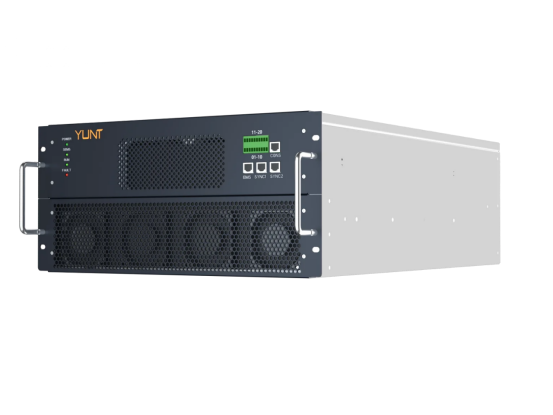
YUNT’s microgrid architecture demonstrates how this approach can work in demanding environments. Its integrated energy storage PCS module supports UPS, DVR, SVG, and voltage ride-through functions, making it suitable for weak grid environments where voltage fluctuations are common.
Because the STS cabinets are designed for seamless grid-connected and off-grid switching, operators can maintain stable power even when renewable generation becomes intermittent. This helps reduce operational risk while improving energy efficiency.
Reducing Downtime and Diesel Dependency
Many industrial facilities still rely heavily on diesel generators during outages or unstable grid periods. Although diesel systems provide backup security, fuel costs and environmental pressure continue to rise.
A recent microgrid project in the Nanchu Scenic Area in Xizang highlights how static transfer switches can improve operational resilience while lowering long-term costs. The project deployed a 60kW/115kWh energy storage cabinet using a multi-energy complementary approach that combined wind, solar, diesel, and storage resources.
The integrated STS cabinets enabled seamless switching to diesel generation whenever renewable energy supply became insufficient. More importantly, the transition occurred without load interruption, ensuring continuous operation for critical equipment and uninterrupted electricity access for local residents.
This type of deployment addresses several business pain points at once. Facilities reduce dependence on continuous diesel operation, lower carbon emissions, and improve energy reliability in remote or unstable grid regions.
Flexible Infrastructure for Expanding Energy Needs
Another challenge facing industrial operators is future scalability. Energy demand often changes as facilities expand, electrification increases, or sustainability goals evolve.
Traditional infrastructure upgrades can be rigid and costly. By contrast, modular STS cabinets support more flexible deployment strategies. YUNT’s integrated containerized solution can be relocated and adapted to different application scenarios, which is especially useful for temporary projects, remote construction sites, or fast-growing industrial operations.
The use of static transfer switches within centralized energy systems also simplifies energy coordination between multiple power sources. This allows businesses to expand renewable integration gradually without compromising reliability.
Building More Resilient Industrial Power Systems
Reliable electricity has become a core business requirement rather than a background utility. Companies that invest in advanced STS cabinets and intelligent static transfer switches are better positioned to manage rising energy costs, improve operational continuity, and support long-term sustainability targets.
YUNT’s microgrid solutions combine seamless switching capability, modular deployment, and multi-energy integration to help industrial operators modernize existing power infrastructure with minimal disruption.