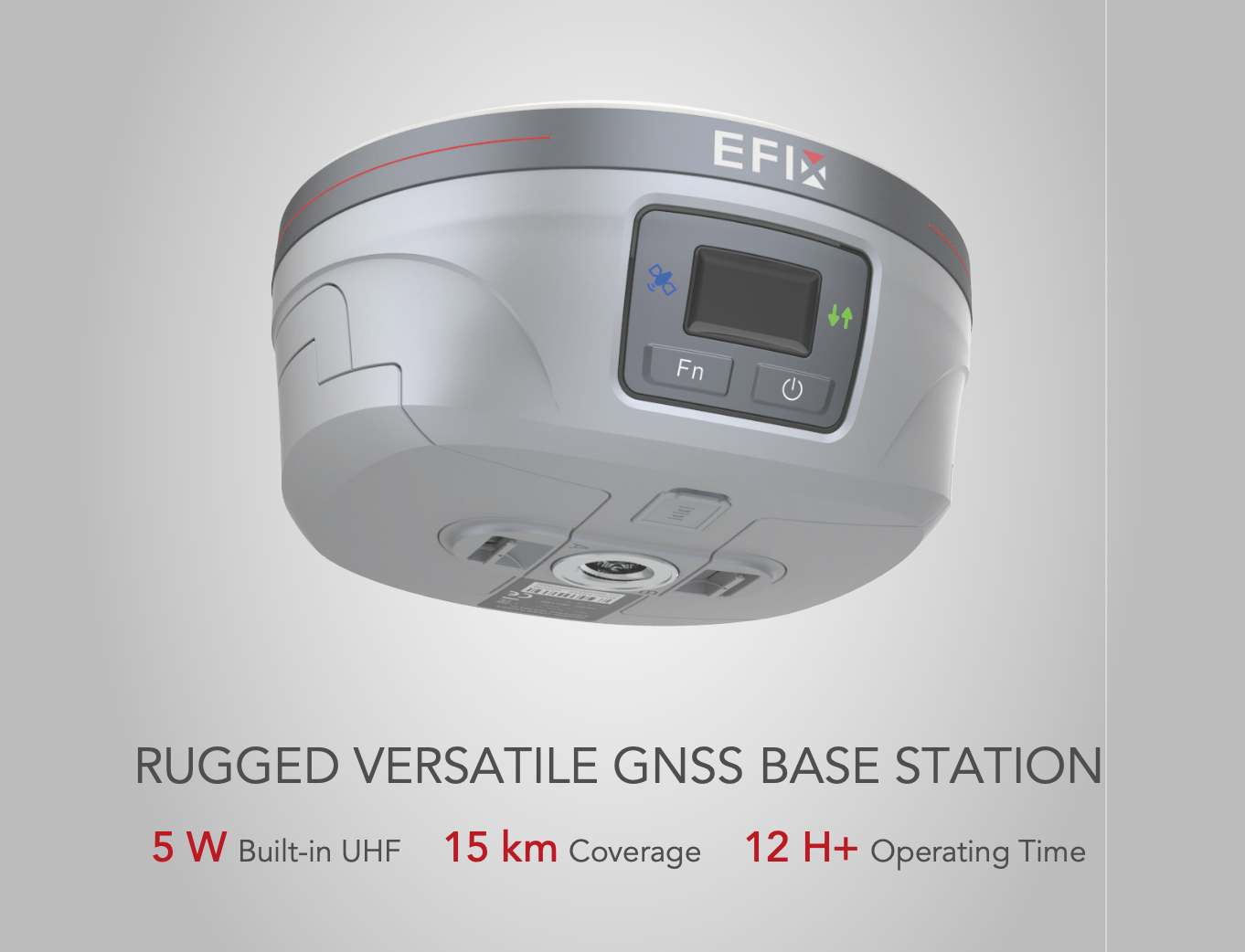
Accurate positioning is essential in both agricultural and surveying applications. GNSS receiver for surveying devices are designed to provide high precision under challenging conditions, supporting centimeter-level accuracy required for mapping, construction, and geospatial analysis. In contrast, agricultural GNSS receivers prioritize efficiency and ease of use, focusing on automated guidance and reduced input waste in field operations. They are usually robust, suitable for integration with tractors and other farm machinery, and balance precision with operational convenience. Understanding the distinctions between these receiver types helps professionals choose the right solution for their specific requirements.
Key Features of Survey Receivers
Survey-grade receivers are optimized for professional measurement tasks. They support multi-constellation tracking and advanced RTK correction methods to ensure accurate and reliable positioning. Operators benefit from high stability in urban or obstructed environments, making them suitable for geodetic surveys and construction site monitoring. Unlike agricultural units, survey receivers often come with modular designs that allow integration with various external antennas and accessories, providing flexibility for complex projects. EFIX provides solutions that consider both accuracy and operational efficiency, bridging gaps between traditional surveying methods and modern field practices.
Agricultural GNSS Solutions
Agricultural GNSS receivers focus on practical field deployment. Systems like the integrated and portable gnss base solution are lightweight and easy to carry, reducing overall package weight by over 70%. They can be set up and started in the field at least three times more efficiently compared to larger survey systems. Integrated 5W UHF and 4G modems allow multi-mode RTK corrections transmission via UHF and TCP/IP, which enhances guidance for tractors and other implements. They enable automated steering, precise seeding, and section control while maintaining acceptable accuracy for crop management tasks, aligning with real-world farming requirements.
Conclusion: Choosing the Right Receiver
Selecting between survey-grade and agricultural GNSS receivers depends on the intended application. Surveying tasks demand maximum accuracy and environmental adaptability, while farming operations prioritize portability, ease of use, and integration with machinery. EFIX offers solutions that address both needs, ensuring field operators can work efficiently without compromising essential precision. By understanding the technical and operational differences, users can make informed decisions, applying the right GNSS receiver for surveying or agricultural purposes in a way that improves productivity and reduces errors.