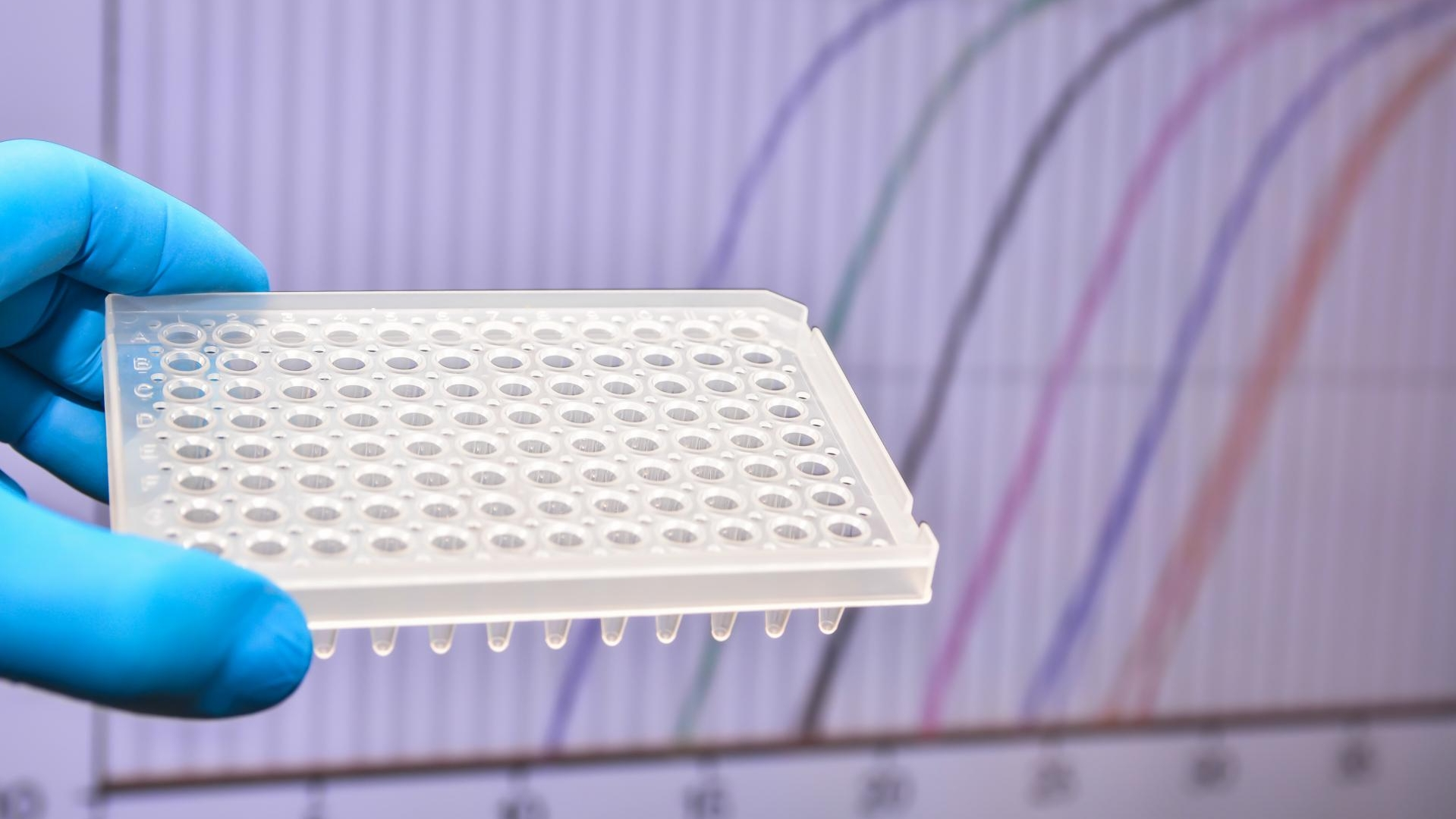
A qPCR master mix is a critical component in quantitative PCR workflows, designed to provide all essential reagents required for amplification in a single formulation. Accurate calculation of a qPCR master mix ensures that each reaction contains the correct proportions of DNA polymerase, buffer, MgCl₂, dNTPs, and other components. This step is essential for maintaining consistency across reactions and achieving reliable amplification performance. In practical laboratory workflows, qPCR master mix preparation is closely linked to upstream nucleic acid extraction, as the quality and concentration of extracted DNA or RNA directly influence reaction setup and outcomes.
Principles of Master Mix Calculation
The calculation of a qPCR master mix is based on the final reaction volume and the number of samples being processed. Typically, a predefined volume of qPCR master mix is combined with primers, template nucleic acid, and nuclease-free water to reach the desired reaction volume. To ensure accuracy, laboratories often prepare a slightly larger volume than required to compensate for pipetting variation. Pre-formulated qPCR master mixes simplify this process by integrating all core components into a single reagent, reducing the need for multiple calculations. These formulations are optimized to provide stable reaction conditions, allowing users to focus on adjusting only primer and template concentrations. Proper calculation ensures uniform reagent distribution across all reactions, which is essential for reproducibility.
Relationship with Nucleic Acid Extraction and Workflow Consistency
The effectiveness of a qPCR master mix is closely related to the quality of nucleic acid extraction performed prior to amplification. High-quality DNA or RNA templates contribute to consistent reaction efficiency, while impurities from incomplete nucleic acid extraction may affect reaction performance. Therefore, accurate quantification and appropriate dilution of the template are important considerations when calculating the qPCR master mix. Standardized workflows that integrate nucleic acid extraction with optimized master mix preparation improve overall consistency. In addition, using pre-formulated qPCR master mix solutions reduces variability by minimizing manual handling and ensuring consistent reagent composition across experiments.
Practical Perspective
Overall, calculating a qPCR master mix involves determining appropriate reagent volumes based on reaction design while considering template quality obtained from nucleic acid extraction. TIANGEN Biotech (Beijing) Co., Ltd. provides qPCR master mix solutions that integrate key components into a single reagent, simplifying preparation and improving consistency. TIANGEN combines expertise in nucleic acid extraction and amplification technologies to support reliable and reproducible qPCR workflows across diverse laboratory applications.