Accelerated corrosion evaluation has evolved from legacy static mist cabinets to multi-atmosphere cycling protocols. Continuous neutral salt spray frequently creates unrealistic blister morphologies and atypical passive-film breakdown that fail to correlate with field performance on automotive structural alloys, battery enclosures, and marine coatings.
Outdoor assemblies face dynamic environmental fluctuations: morning dew, driving rain, chemical deicers, solar heating, and dry winds. Capturing these micro-climatic shifts demands testing strategies capable of replicating fluctuating electrolyte concentrations, oxidation kinetics, and differential aeration stresses across complex geometries.
Selecting an appropriate simulation platform requires aligning mechanical chamber performance with specific degradation kinetics. Reliability engineers must evaluate transition velocity, atmosphere generation, and cabinet metallurgy to configure testing routines that yield defensible, auditable quality data across multi-facility manufacturing networks.
Beyond Static Salt Fog: Atmospheric Degradation and Cyclic Realism
Continuous salt spray testing, such as ASTM B117, exposes specimens to a controlled salt fog environment without the programmed wet-dry transitions used in cyclic corrosion testing. Corrosion products formed during continuous salt spray exposure may differ from those developed under natural wet-dry cycles because the exposure conditions and electrochemical processes are different.
Natural degradation progresses most aggressively during phase transitions from wet to dry states. Evaporating moisture concentrates sodium and chloride ions on exposed interfaces, precipitating rapid osmotic blistering, severe intergranular cracking, and aggressive filiform undercut beneath organic paint matrices.
Subsequent re-wetting phases rapidly dissolve accumulated salt crystals, re-energizing localized galvanic couples and initiating fresh pitting fronts. Reproducing selected wet-dry and humidity transitions can help evaluate corrosion behavior under conditions that may be more representative of certain automotive or marine service environments. Correlation with field performance should be validated for the specific material and test protocol.
Essential Hardware Criteria for Multi-Atmosphere Corrosion Testing
Selecting a suitable corrosion testing cabinet requires evaluating its environmental control capabilities, operating modes, and compatibility with the intended test procedures. A versatile cyclic corrosion test chamber enables laboratories to conduct controlled corrosion exposure tests under different environmental conditions. Equipment selection should be based on the applicable testing standards, specimen characteristics, and specific requirements of the intended evaluation.
Temperature and humidity control are important considerations when reproducing different environmental exposure conditions. The ability to configure appropriate test conditions and transition between exposure stages helps laboratories evaluate coating and material performance under cyclic corrosion testing programs. Users should verify the operating range and environmental control capabilities of the selected equipment against the requirements of their testing methods.
Spray generation and distribution also influence the consistency of corrosion testing. A suitable system should provide stable spray conditions and support the preparation and delivery of the test solution according to the applicable standard. Factors such as solution preparation, spray uniformity, and routine equipment maintenance should be considered when establishing repeatable testing procedures.
For testing methods involving different corrosive environments, the equipment should support the exposure conditions required by the selected test program. Depending on the applicable standard, these conditions may involve neutral salt spray, acetic acid salt spray, or copper-accelerated acetic acid salt spray testing. Laboratories should verify the capabilities of the selected cabinet and follow the relevant procedures for solution preparation, equipment operation, and cleaning to maintain reliable and comparable test results.
Programming Critical Transitions: Salt Fog, Prohesion, and Controlled Humidity
Formulating an effective cyclic program requires sequencing distinct environmental phases to stress specific failure mechanisms. Automotive protocols like VDA 233-102 or SAE J2334 systematically alternate electrolyte spray, hot air drying, and damp heat condensation cycles to expose weaknesses in multilayer e-coat systems.
Drying phases demand vigorous air handling to evacuate suspended aerosols before elevating temperatures. Introducing clean, heated air drives rapid evaporation, forcing dissolved salts to crystallize within micro-fissures and exert destructive mechanical pressure against adhesive interfaces.
Static high-humidity intervals follow drying to induce secondary moisture uptake without washing away deposited surface salts. Regulated condensation encourages moisture penetration through micro-cracks, re-activating dormant electrochemical cells beneath the coating without diluting localized chloride concentrations.
Configuring customized test matrices through a modern cyclic corrosion test chamber touchscreen controller ensures repeatability across multi-week validation runs. Digital microprocessors store multi-step cycles and export complete records to USB flash drives, simplifying compliance audits against ISO 9227, ISO 16701, and ASTM G85.
Chamber Durability and Specimen Positioning
Cyclic corrosion testing equipment must provide controlled exposure conditions to support reliable material and coating evaluation. BIUGED INSTRUMENTS offers multi-functional cyclic corrosion test cabinets designed to combine different environmental exposure stages within a single testing system. Selecting appropriate test conditions and following consistent operating procedures help laboratories evaluate corrosion resistance under repeatable conditions.
Sample positioning and preparation are important factors in corrosion testing. Differences in specimen orientation, surface condition, and placement can affect exposure to salt spray, moisture, and drying conditions. Following the applicable test standard and maintaining consistent specimen placement help laboratories improve the comparability of test results.
Specimen mounting should be selected according to the applicable testing method and sample requirements. Consistent positioning helps ensure that samples are exposed under comparable conditions throughout the test cycle. Laboratories should follow the relevant standard when determining specimen orientation, spacing, and mounting arrangements.
Testing larger or heavier components requires appropriate consideration of sample dimensions, weight, and support requirements. Before testing, users should confirm that the selected equipment configuration is suitable for the specimens and intended exposure program. Proper loading practices help support safe operation and consistent test execution.
Equipment configuration and environmental control are important considerations when selecting a cyclic corrosion test cabinet. BIUGED INSTRUMENTS provides equipment designed for corrosion evaluation involving different exposure conditions. Laboratories should select suitable testing programs and operating parameters according to their applicable standards and material evaluation requirements.
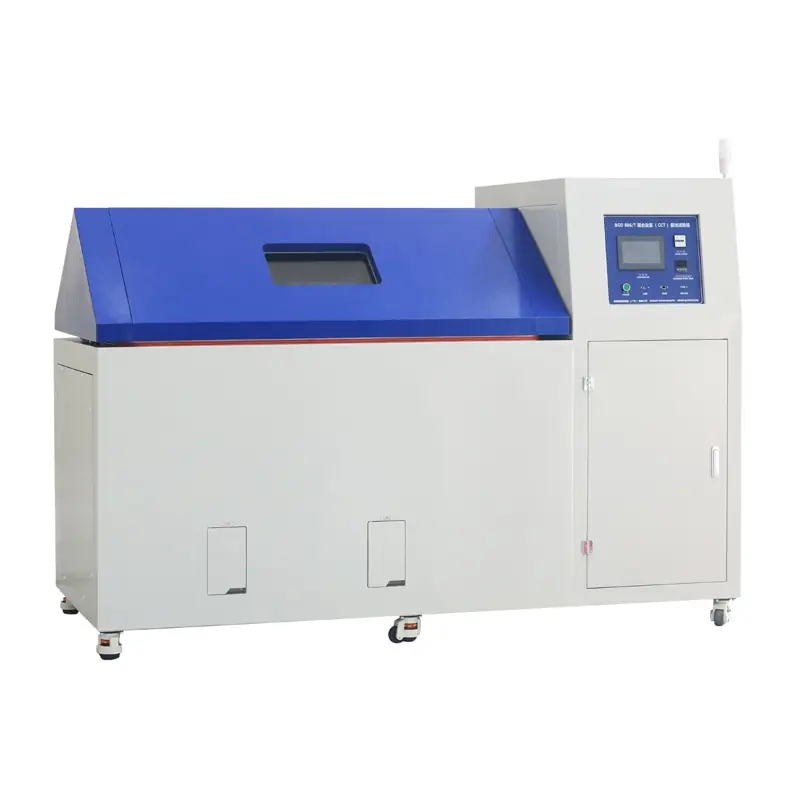
The BGD 887/T Multi-functional Cyclic Corrosion Test Cabinet is part of BIUGED INSTRUMENTS’ cyclic corrosion testing range. According to the official product specifications, the BGD 887/T has a working chamber capacity of 1,280 liters. The product series supports cyclic corrosion testing that combines salt spray, humidity, and drying conditions, helping laboratories evaluate the corrosion resistance of coatings and materials under controlled exposure programs.
Precision Engineering in Accelerated Environmental Stress Testing
Bridging the gap between laboratory acceleration and authentic field degradation requires equipment engineered for uncompromised environmental control. Advanced metallurgy, strict boundary control, and flexible sequence programming establish the foundation for defensible coating and alloy validation.
Renowned for engineering excellence in material testing technology, BIUGED INSTRUMENTS designs high-performance environmental weathering chambers, precision corrosion cabinets, and advanced testing instruments for quality-focused laboratories. Their multi-functional cyclic cabinets deliver precise atmospheric transitions, rugged titanium durability, and strict compliance with global corrosion standards.
Modernize laboratory testing workflows and eliminate unexpected field corrosion failures with purpose-engineered environmental simulation systems. Connect with BIUGED INSTRUMENTS today to evaluate cyclic test cabinet capacities, review technical specifications, and configure customized testing programs with experienced specialists.