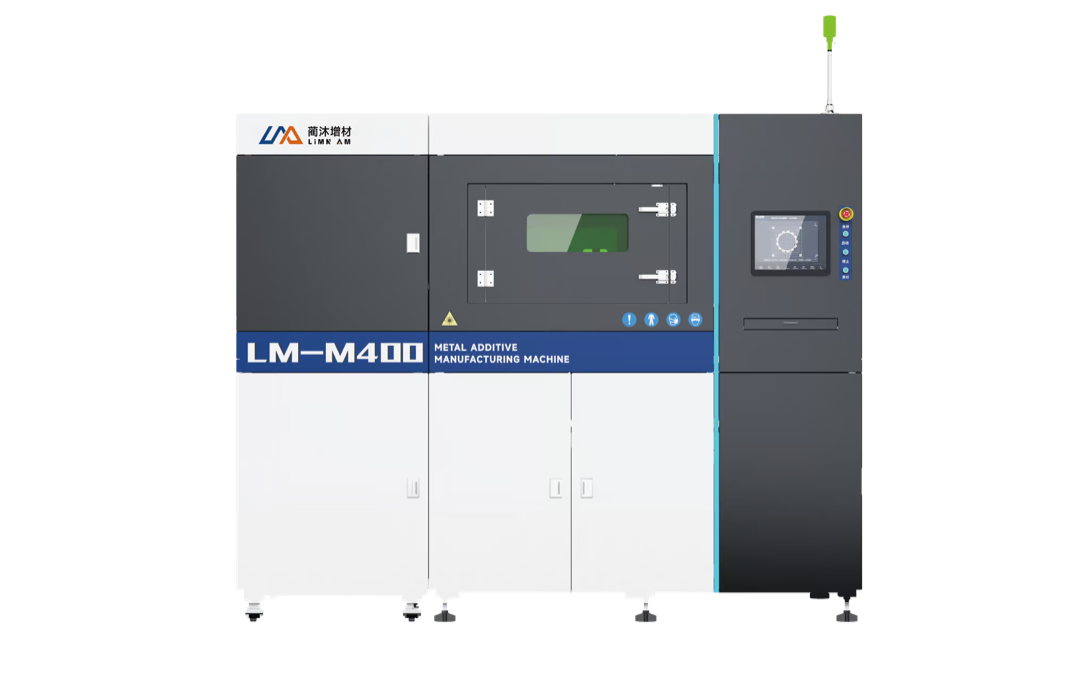
In industrial manufacturing, additive processes have shifted how engineering teams produce intricate, high-performance metal components. By constructing geometries layer by layer, direct metal fabrication enables functional features—such as conformal cooling networks and optimized structural lattices—that traditional machining cannot produce directly from raw stock. However, a common misconception among organizations evaluating the technology is that parts emerging from the build chamber are ready for immediate end-use deployment.
In practice, post-processing remains an indispensable stage of the overall production workflow. Understanding how printing physics dictate secondary operations allows engineering teams and production managers to accurately estimate total manufacturing costs, lead times, and mechanical performance.
Why Can’t As-Printed Metal Parts Be Used Immediately?
To understand post-processing requirements, one must examine the physical environment inside the build chamber during laser fusion. As a high-powered laser melts localized areas of fine metal powder, extreme thermal gradients develop between the molten pool and surrounding cooler material. Rapid heating and cooling cycles create significant internal residual stress within the part.
Furthermore, components are fused directly onto a rigid metal build plate. Overhanging features, internal voids, and steep angles often require temporary support structures. These supports anchor the component, prevent thermal warping, and dissipate excess energy into the platform. Once the print cycle finishes, the component is trapped in a bed of loose powder, anchored to the build plate, and subject to internal mechanical stress. As a result, subsequent thermal, mechanical, and surface finishing operations are necessary to transition the raw build into a fully functional industrial component.
Key Thermal and Mechanical Steps in Metal AM Operations
The transition from a freshly printed geometry to a finished production part involves several sequential post-processing operations. Each step addresses specific metallurgical, structural, or surface requirements.
Thermal Stress Relief and Heat Treatment
Before removing the part from the build platform, stress relief heat treatment is usually mandatory. Placing the entire build plate into an atmosphere-controlled furnace relaxes internal thermal stresses generated during laser melting. Skipping this step can lead to structural distortion or micro-cracking when the part is detached from the platform.
Depending on the alloy and mechanical requirements, additional thermal cycles may follow. For instance, precipitation hardening or solution annealing can optimize tensile strength and grain structure. In critical aerospace and medical applications, Hot Isostatic Pressing (HIP) applies high pressure and elevated temperatures simultaneously. This process closes internal micro-voids, significantly improving fatigue resistance and structural density.
Platform Separation and Support Removal
Once thermal stress is relieved, the part must be separated from the build platform. Bandsaws or Wire Electrical Discharge Machining (EDM) are typically used to cut through support interfaces at the base plate. Wire EDM offers precise cutting action, minimizing material loss and preserving tight tolerances on lower mounting faces.
After platform separation, technicians manually or mechanically remove temporary internal and external support structures. Design for Additive Manufacturing (DfAM) principles emphasize minimizing support volume, as manual support removal can increase labor hours and affect surface uniformity.
Dimensional Machining and Surface Finishing
For SLM metal printed parts, as-built surface roughness is affected by powder particle size, layer thickness, and build orientation.While this texture may be acceptable for non-mating structural elements, critical sealing interfaces, bearing seats, and threaded holes require traditional subtractive finishing.
Subtractive CNC milling or turning is frequently used to machine critical mating surfaces to exact dimensional tolerances. For general surface smoothing, techniques such as abrasive bead blasting, centrifugal barrel finishing, or electropolishing remove loosely adhered powder particles and reduce surface roughness, improving fluid flow efficiency and component aesthetics.
Real-World Application Scenarios
Post-processing requirements vary significantly based on the intended application, operational environment, and performance criteria of the component.
Aerospace Turbine Fuel Injectors
Fuel injectors operating in high-temperature combustion environments demand exceptional creep resistance and flawless internal geometry. After printing in high-temperature superalloys, the components undergo stress relief and Hot Isostatic Pressing to eliminate micro-porosity. Internal fuel passages are chemically polished to reduce friction and turbulence, while critical mounting flanges are precision-turned on multi-axis CNC lathes to ensure leak-free sealing.
Medical Orthopedic Implants
Acetabular hip cups and spinal cages present a unique dual requirement. The exterior porous mesh designed for biological bone ingrowth is intentionally left unmachined, undergoing only ultrasonic cleaning and bead blasting to clear loose powder. Conversely, articulated bearing surfaces and screw insertion ports are precision-machined and polished to a mirror finish to minimize wear particles during joint movement.
Injection Mold Tooling
Tool steel inserts with internal conformal cooling channels require careful heat treatment to reach designated Rockwell hardness levels. Wire EDM separates the block from the platform, followed by precision CNC grinding on parting lines and cavity faces. The internal cooling pathways are flushed with high-pressure media to clear any residual particles, ensuring uninhibited coolant circulation during high-volume molding operations.
Strategic Manufacturing Partnerships
Integrating additive capabilities into established production lines requires reliable hardware platforms and robust metallurgical expertise. LiMN 3D is a high-tech enterprise specializing in metal additive manufacturing technology. They focus on the R&D, production, and application promotion of Selective Laser Melting (SLM) equipment, while providing forming technologies and customized processing services. Their industrial systems support equipment adoption across aerospace, automotive, medical, and scientific research sectors.
Summary
While direct 3D printing forms complex geometries that subtractive methods cannot replicate, it does not eliminate the need for traditional finishing techniques. Instead, Metal AM redefines post-processing into a complementary workflow—combining stress relief, support removal, CNC machining, and surface polishing to achieve finished industrial components. By incorporating post-processing considerations into initial component design, manufacturers can optimize production efficiency and unlock the full operational value of additive technologies.