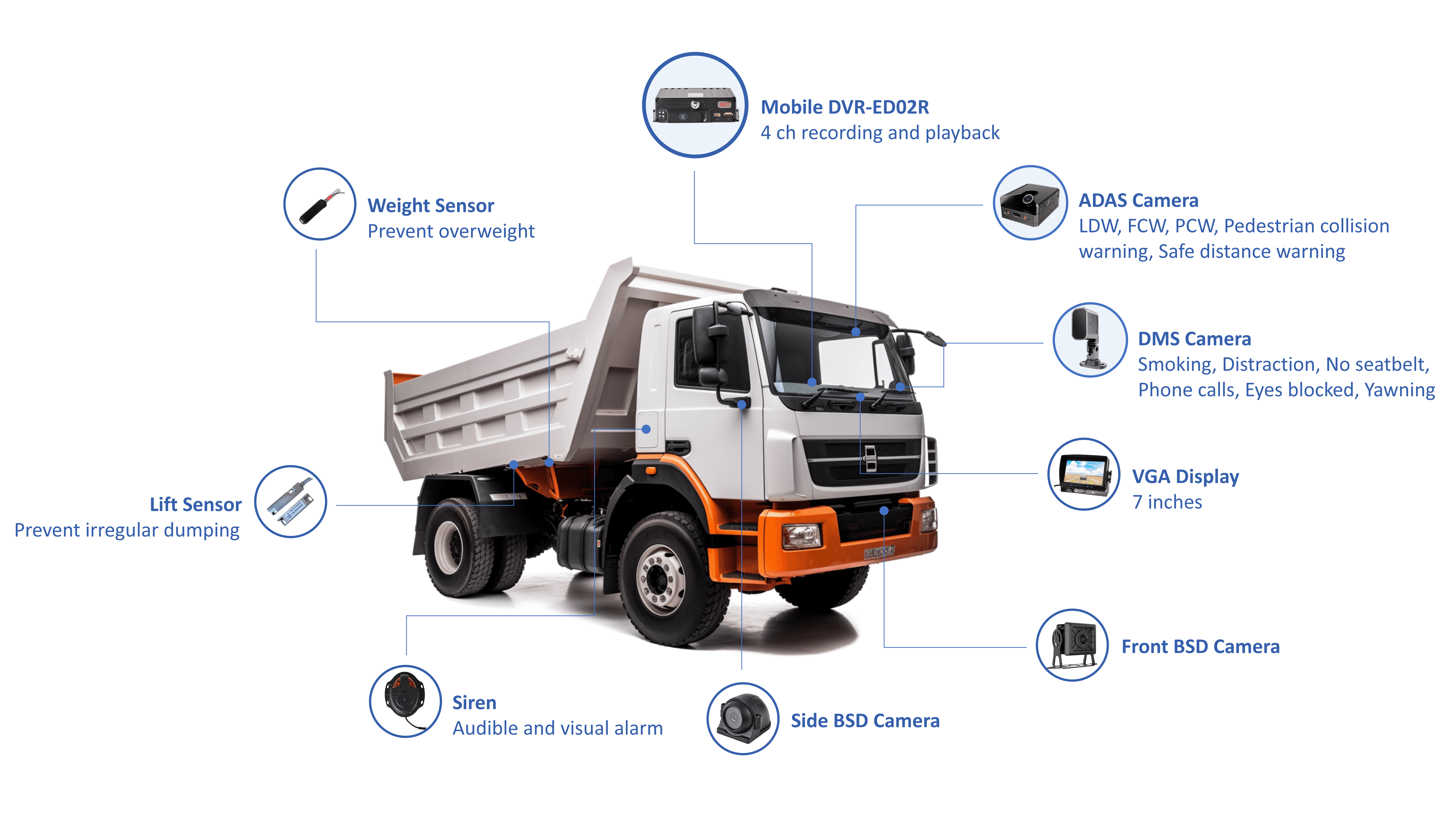
Mining fleets operate across haul roads, loading points, workshops, processing areas, and other work zones where conditions can change quickly. AI video telematics helps managers connect visual evidence with location and vehicle data. When used with mining fleet management software, it can support incident review, driver coaching, dispatching, and asset monitoring. This makes mine fleet management more practical because teams can understand not only where an event happened, but also what happened around the vehicle.
Better Visibility Across Mining Routes
GPS tracking provides location information, but mining operations often need more context. A truck may stop near a loading point, slow down on a haul road, or enter a restricted area. Location data shows the movement, while video can help explain the reason behind it.
This is useful on sites where mining trucks, loaders, service vehicles, and personnel share nearby working areas. Video records can help supervisors review traffic interactions, road conditions, queueing, and unusual stops without relying only on later verbal reports.
The same records can support shift handovers. Instead of passing on only written notes, supervisors can review selected events with the next team.
When mining fleet management software combines GPS, alerts, and video clips in one workflow, managers can review events more efficiently. They can compare the event time, vehicle position, and surrounding conditions before deciding whether the issue was operational, safety-related, or simply part of normal site activity.
Driver Behavior Can Be Reviewed More Clearly
Mining trucks may work on steep gradients, uneven roads, dusty routes, and areas with limited visibility. These conditions make driver behavior an important part of daily operations. AI-assisted monitoring can help identify events such as harsh braking, rapid acceleration, distraction, or unsafe following distance when the device is configured for those functions.
Event-based video gives supervisors a clearer basis for coaching. Instead of discussing driving performance in general terms, they can review a specific situation and explain what should change. This can make training more relevant to the site and the vehicle type.
Video review can also help avoid inaccurate assumptions. A sudden braking event, for example, may result from a road obstacle rather than poor driving. Looking at the surrounding scene allows supervisors to separate driver-related issues from conditions created by the work environment.
For mine fleet management teams, repeated event patterns can also reveal where extra training may be needed. If similar alerts occur on the same route or shift, managers can check whether the cause is driver behavior, road design, traffic flow, or another operational factor.
Vehicle Status Supports Better Dispatch Decisions
Dispatching in mining is not only about sending the nearest truck to the next task. Vehicle condition also matters. A truck with a diagnostic warning or recent safety event may need inspection before receiving another assignment.
Telematics can support this process by combining vehicle health data, GPS position, and operational alerts. This gives dispatchers more information when deciding whether a vehicle should continue working, return to a workshop, or be reassigned.
Historical data can add another layer of context. If the same vehicle shows repeated warnings or unusual operating events, maintenance teams can review the pattern before a planned service.
The Mining Truck solution from BSJ Technology reflects this type of workflow. They combine IoT-based GPS tracking, driver behavior monitoring, vehicle health diagnostics, safety alerts, and intelligent dispatching. These functions are relevant to mining fleets that need both operational visibility and practical control over daily vehicle use.
Integration Is Important for Existing Fleet Systems
Mining companies may already use dispatch software, maintenance platforms, reporting tools, or third-party fleet systems. For this reason, telematics equipment needs to fit into existing workflows instead of creating another isolated source of data.
Open integration is especially useful for distributors, system integrators, and solution providers. BSJ Technology supports third-party software platforms such as Wialon and GpsGate. They also provide OEM and ODM cooperation, which can help partners adapt devices and interfaces to specific project requirements.
Their hardware engineering resources, technical support capability, quality control, certification coverage, and more than 400 R&D personnel can support projects that need customization. These factors matter more in large deployments where device compatibility, delivery planning, and technical coordination can affect rollout progress.
Integration planning should also consider how data will be used after installation. Fleet operators may need video events for safety teams, location data for dispatchers, and diagnostic information for maintenance staff.
Operational Value Comes From Connected Data
AI video telematics is useful because it connects several types of information around the same event. Video shows what happened near the vehicle. GPS shows where it happened. Driver monitoring adds behavior data, while diagnostics provide information about vehicle condition.
For mining fleet management software users, this combined view can support incident investigation, route analysis, driver coaching, maintenance planning, and dispatch decisions. It can also reduce the need to switch between separate systems when reviewing an event.
For mine fleet management, the value comes from better context rather than from one single feature. Video telematics does not replace site procedures, driver training, or maintenance programs. It gives fleet teams clearer evidence to support those processes. In demanding mining environments, that can help managers make more informed decisions about safety, productivity, and vehicle use.