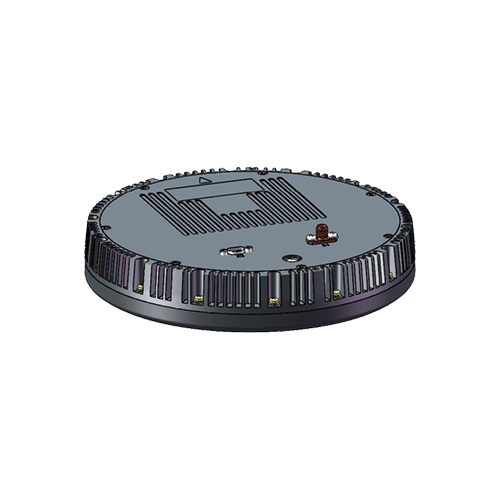
Modern positioning solutions depend on reliable signal reception from multiple satellite constellations. In global navigation systems, antennas play a central role in capturing weak radio frequency signals transmitted from space. The performance of these antennas directly influences positioning accuracy, signal stability, and navigation reliability in applications such as surveying, autonomous systems, and asset tracking. For Archimedes Innovation, selecting the right antenna is a foundational step in ensuring robust navigation performance across different environments.
Key Antenna Types Used in Global Navigation Systems
Global navigation systems typically rely on a few established antenna designs, each optimized for specific operational conditions. One of the most widely used types is the ceramic patch antenna, known for its compact structure and stable reception in fixed or low-mobility applications. This type is commonly used in devices that require consistent positioning solutions with limited space constraints.
Another important design is the helical antenna, which provides strong performance in dynamic environments. It is often used in drones or mobile platforms because it maintains better signal tracking even when the device changes orientation rapidly.
A third category is the choke ring antenna, which is designed for high precision applications. It reduces multipath interference, making it suitable for geodetic surveys and advanced global navigation tasks where accuracy is critical.
Frequency Coverage and Global Navigation Compatibility
In global navigation systems, antennas must support multiple frequency bands to communicate with different satellite networks such as GPS, Galileo, GLONASS, and BeiDou. These signals typically fall within the L-band spectrum, requiring antennas that can operate across a wide frequency range to ensure uninterrupted positioning solutions. Multi-band antennas are especially important for improving accuracy and reducing atmospheric errors in high precision navigation tasks.
Active and Passive Antenna Considerations
Another important distinction in global navigation systems is whether an antenna is active or passive. Active antennas include a built-in low-noise amplifier to strengthen weak satellite signals before sending them to the receiver, which improves performance in low-signal environments. Passive antennas, on the other hand, rely solely on external receiver amplification and are typically used in simpler or cost-sensitive applications.
Conclusion
Choosing the right antenna for global navigation depends on system requirements, environmental conditions, and required positioning accuracy. Patch, helical, and choke ring antennas each serve different roles in positioning solutions, while frequency coverage and active amplification further refine performance. At Archimedes Innovation, understanding these antenna types is essential for designing reliable and efficient global navigation systems that support accurate and stable positioning across diverse applications.