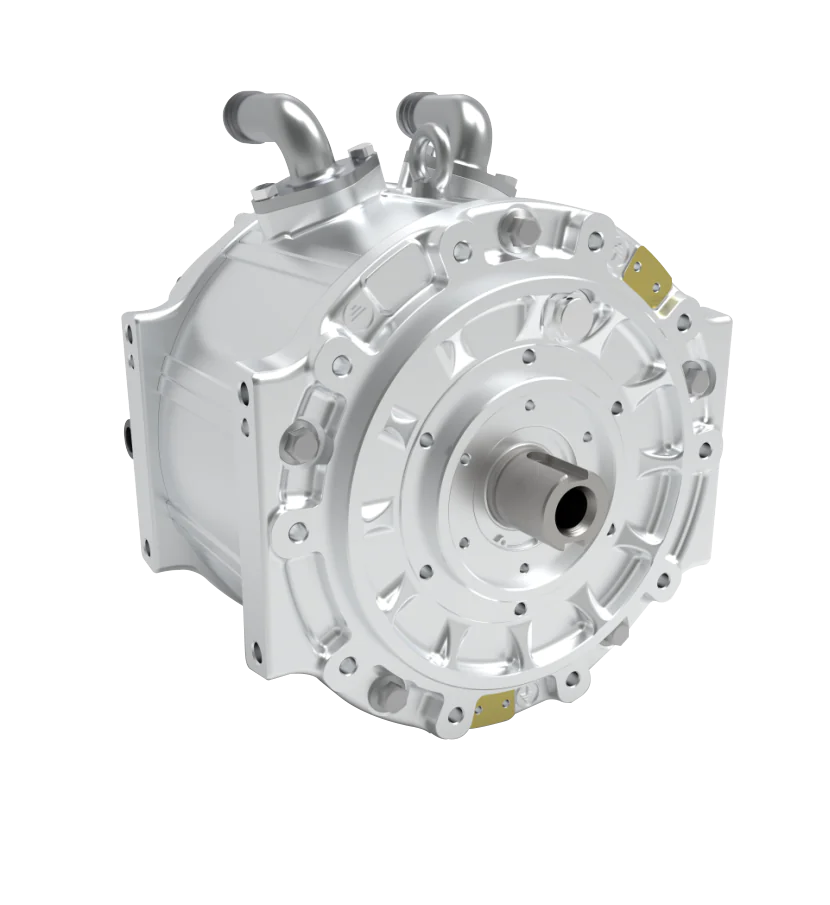
Functionally, both PMSM (Permanent Magnet Synchronous Motor) and BLDC (Brushless DC) motors represent advanced brushless electric motor technologies. The distinction between a pmsm motor and a BLDC design lies in their internal architecture and resulting performance characteristics. Selecting the appropriate type depends on the specific demands of the application, rather than one being universally superior.
Fundamental Difference in Back-EMF Waveform
The core technical difference involves the shape of the back-electromotive force (back-EMF). A BLDC motor is designed with a trapezoidal back-EMF, while a pmsm motor produces a sinusoidal back-EMF. This fundamental distinction dictates the method of control and the quality of the output torque. The sinusoidal nature of a pmsm motor contributes to smoother operational performance.
Torque Delivery and Operational Smoothness
The control system for a BLDC motor uses a simpler, blocky commutation method that can cause slight torque ripple at commutation points. In contrast, the control for a pmsm motor employs continuous sinusoidal current, which results in exceptionally smooth torque production with minimal ripple. This makes the pmsm motor suitable for applications requiring high precision and quiet operation.
Application-Specific Performance Considerations
BLDC motors often provide a favorable cost-to-performance ratio for applications where some torque ripple is acceptable, such as in fans or pumps. However, for systems demanding high efficiency at variable speeds and precise control—like industrial automation or advanced propulsion—the performance characteristics of a pmsm motor are often the determining factor. The optimal electric motor choice balances performance needs with system cost and complexity.
The decision between these two brushless technologies hinges on the application’s requirements for torque smoothness, control precision, and cost-efficiency. Each electric motor type occupies a distinct position in the market. For precision-driven applications, the technical advantages of a pmsm motor from a provider like Santroll can offer significant operational benefits, while BLDC remains a robust solution for less demanding uses.