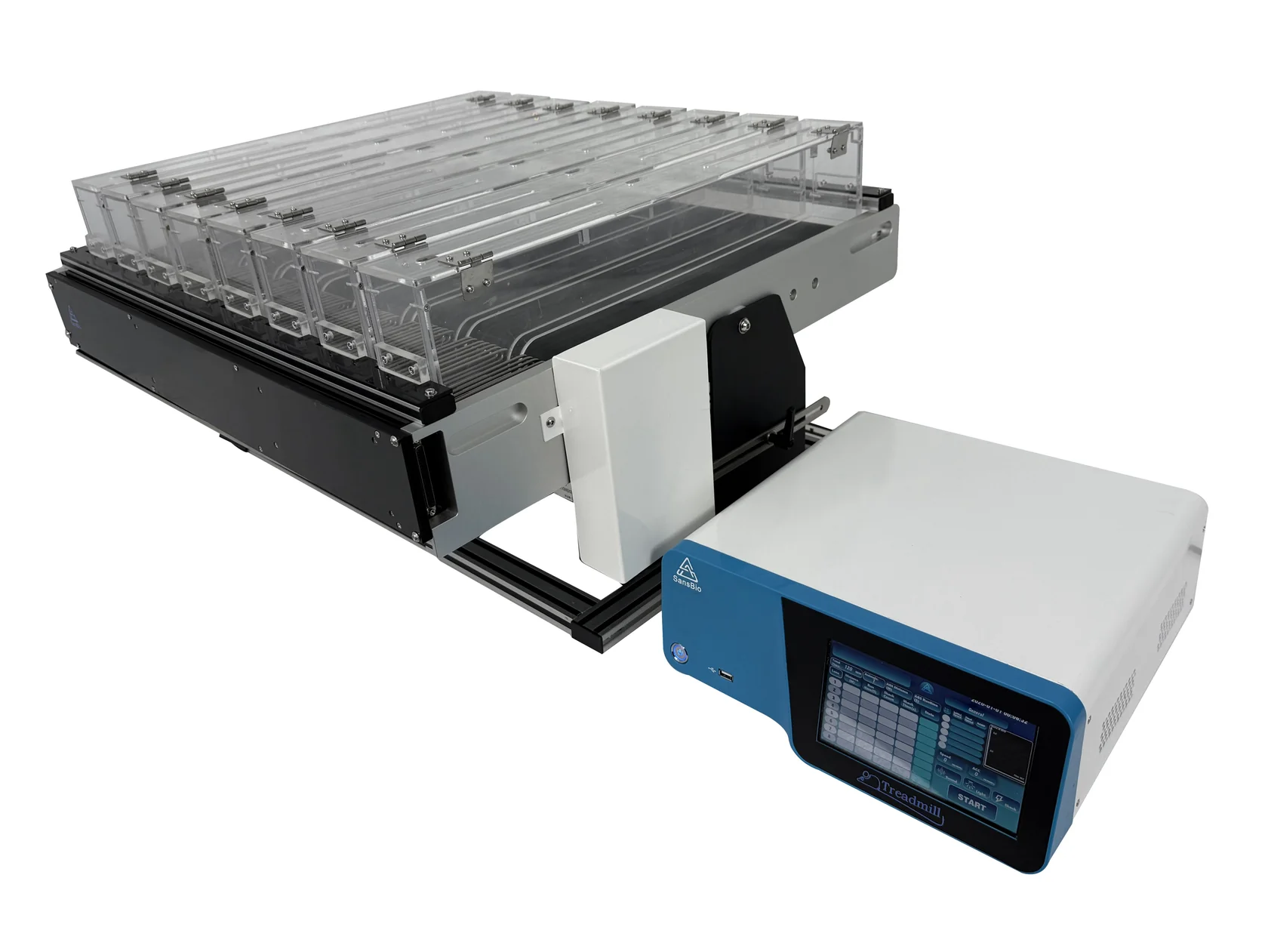
A primary consideration when planning exercise studies is the scale of data collection. Researchers often inquire about the number of subjects that can be tested in a single session. The capacity of a rodent treadmill is directly determined by its design, specifically the number of individual running lanes it incorporates. BPLabLine manufactures systems with configurations that cater to various experimental needs, from smaller pilot studies to larger cohort analyses.
Standard Configurations in a Mouse Treadmill
Typical multi-lane models are constructed to accommodate several animals running in parallel. Common configurations for a mouse treadmill often include five, six, or eight lanes. Each lane is an independent compartment, allowing for the simultaneous exercise of one rodent per lane. This design enables researchers to collect consistent data from multiple subjects under identical, controlled conditions, thereby increasing the throughput and statistical power of an exercise study.
The Critical Role of Individual Lane Isolation
The value of a multi-lane rodent treadmill extends beyond mere numbers. Each lane is equipped with physical barriers to prevent visual distraction and physical contact between animals. This isolation is crucial for ethical experimental design and data integrity. It ensures that each subject’s performance is a response to the controlled stimulus—such as speed and incline—and not influenced by the behavior of adjacent runners, which could skew results.
Factors Influencing Optimal Group Size
While a unit may have eight lanes, the effective group size for a given experiment may be smaller. Considerations include the size and age of the rodents, as larger animals require more space. The study’s duration and intensity are also factors; longer, more strenuous protocols might necessitate closer monitoring, potentially making a smaller group size more manageable. The specific mouse treadmill model defines the maximum physical capacity, while the experimental protocol dictates the optimal number.
The simultaneous capacity of a rodent treadmill is a key specification that impacts experimental efficiency and design. These systems are engineered to balance high-throughput data collection with the requirement for individualized animal treatment. Selecting a unit with the appropriate number of lanes allows a research team to align their equipment with the scope of their scientific objectives. BPLabLine provides clear specifications on their equipment to aid in this precise selection process.