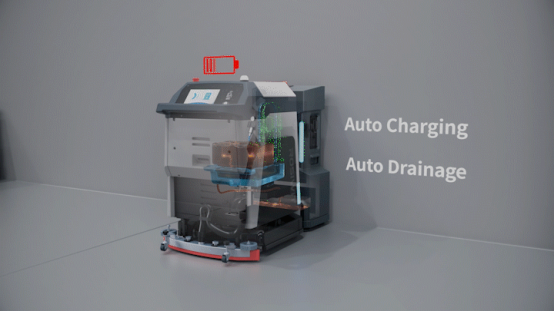
Modern facility management necessitates a precise evaluation of hardware to optimize maintenance protocols. Facility managers often compare an autonomous cleaning robot against an automatic cleaning robot to determine which system best aligns with their infrastructure requirements. While these categories share the goal of maintaining clean surfaces, the technical methodologies employed to achieve these results vary significantly. Establishing a clear distinction between these automated systems helps organizations prioritize capital expenditure toward solutions that offer measurable improvements in output and labor consistency.
Architectural Intelligence and Sensory Feedback
The core difference between these systems lies in their sensory perception and decision-making capabilities. An autonomous cleaning robot like the Skywalker GT utilizes advanced 3D LiDAR, RGB-D vision, and ultrasonic sensing to interpret environmental data in real-time, enabling it to precisely identify suspended, low-lying, and moving obstacles. These machines identify obstacles, calculate efficient pathways, and adapt to changing conditions without human intervention. Conversely, an automatic cleaning robot typically functions based on pre-set parameters or defined physical boundaries. Although these units are consistent, they lack the sophisticated logic required to make independent adjustments when physical constraints in a facility shift unexpectedly.
Scalability and Integration Requirements
When organizations integrate new technology into a large-scale commercial space, scalability remains a primary factor. An autonomous cleaning robot provides the agility to move through high-traffic zones, adapting to dynamic environments where foot traffic or furniture layouts vary throughout the day. Rosiwit engineers their products to manage such complexity, allowing facilities to maintain high standards of cleanliness across varying floor plans. An automatic cleaning robot remains effective for routine tasks in controlled, static environments where the physical layout rarely deviates from established norms.
Maintenance Cycles and System Longevity
Professional sanitation demands hardware that offers consistent performance over extended service intervals. An automatic cleaning robot features a robust yet straightforward mechanical design, which simplifies routine maintenance and repair tasks for facility staff. These systems are reliable for high-frequency cleaning of long, unobstructed corridors. However, an autonomous cleaning robot involves more intricate electronic components that require periodic specialized calibration. Rosiwit ensures that their systems provide clear diagnostic data to streamline these technical requirements, supporting the long-term operational viability of the equipment within a professional facility.
Conclusion
Facility managers must balance immediate budgetary constraints against long-term operational flexibility when acquiring new equipment. The consistent, predictable performance of an automatic cleaning robot serves well in repetitive, static environments. For facilities characterized by high variability and complex floor plans, the intelligent responsiveness of an autonomous cleaning robot provides a superior path to maintaining cleanliness. By identifying the specific needs of a workspace, organizations ensure they deploy the correct technology for sustainable and efficient facility sanitation.