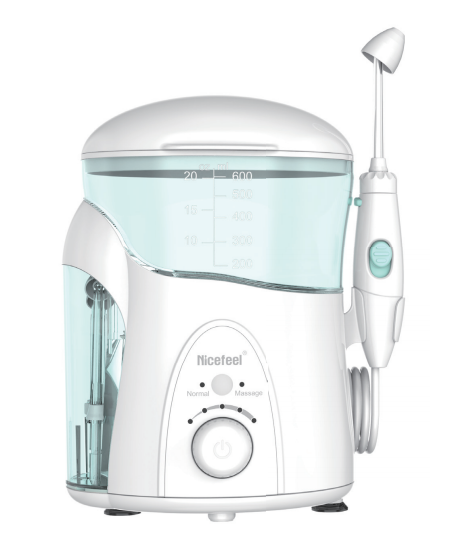
Nose irrigation uses saline solution to rinse the nasal passages and mechanically remove mucus, allergens, dust, and other debris. Unlike a fine nasal spray, irrigation sends a larger volume of liquid through a nozzle, allowing the solution to enter one nostril and drain through the other.
The FDA includes battery-operated pulsed devices among nasal irrigation systems. When used correctly, these devices can help flush the nasal passages, but safe water preparation and proper cleaning are essential because contaminated water may introduce infection risks.
Understanding Nose Irrigation
The basic principle of nose irrigation is mechanical cleansing. Saline flows through the nasal cavity and can loosen thick mucus while helping clear unwanted material. Clinical guidance also describes saline irrigation as supporting mucociliary function, which contributes to the nose’s natural clearance process.
Saline is important for the process. Plain water can irritate nasal tissues, while saline solutions are designed to pass through the nasal membranes with less burning or discomfort. The FDA recommends following the specific instructions supplied with the irrigation device when preparing and using the rinse.
How a Powered Nasal Irrigation System Delivers Water
A powered nasal irrigation system uses an electric motor or pump to regulate water movement rather than depending entirely on gravity or manual squeezing. The system draws saline from a reservoir and sends it through a nasal jet tip at a controlled rate.
Pressure and pulse settings influence how the solution is delivered. The purpose is controlled flushing rather than simply maximizing pressure. Product engineers therefore need to balance pump performance, nozzle design, water flow, and control settings to create repeatable delivery.
Why Pressure and Flow Need Control
For a powered nasal irrigation system, pressure should be evaluated alongside flow rate and pulse behavior. A higher pressure figure is not automatically better because nasal irrigation depends on controlled delivery and user comfort.
Product configurations can vary significantly. Some systems use low-pressure ranges around 0–10 psi, while different models offer different flow rates and operating modes. This allows manufacturers to develop products around portable, personal, or countertop applications rather than relying on a single technical architecture.
Tank Capacity Shapes the Experience
Water capacity determines how long an irrigation session can continue before refilling. Countertop systems can accommodate larger reservoirs, while portable designs generally reduce capacity to save space and weight. The right specification depends on the intended application.
A compact device may prioritize portability, whereas a household product can emphasize larger capacity and longer continuous operation. Buyers should therefore assess tank size together with product dimensions, cleaning requirements, and expected usage patterns.
Nozzle Design Is Part of the Technology
The nasal jet tip determines how the saline stream enters the nasal passage. A secure connection and appropriate tip geometry are important because pump performance alone does not determine the final water-delivery pattern.
Some irrigation products provide multiple tip configurations for different intended uses. During product evaluation, buyers should examine tip compatibility, replacement, cleaning, and handling alongside the water-delivery system.
Waterproofing and Electrical Protection
Water is central to nasal irrigation, making enclosure protection an important engineering consideration. Waterproof ratings can differ depending on a product’s electrical architecture and intended application.
The distinction between ratings is important for technical communication. A countertop model and a portable model may have different protection levels, so waterproof claims should always be tied to the exact configuration being marketed and tested.
What Flycat Offers for Nasal Irrigation
For brands sourcing a powered nasal irrigation system, Flycat provides a portfolio covering handheld, portable, and countertop nasal irrigators. Their category includes models with different tank capacities, pressure ranges, water-flow rates, operating modes, battery capacities, and waterproof ratings.
For example, their NJ288 standard nasal irrigator lists a 600 mL tank, normal and pulse modes, a 0–10 psi pressure range, and water flow of 10–425 mL/min. Their portable NJ1581 lists a 220 mL tank, four modes, 0–10 psi pressure, 74–185 mL/30s flow, and an IPX7 waterproof grade.
Engineering Support for Product Development
When developing nose irrigation products, brands may need support with product design, tooling, testing, customization, packaging, and production. Flycat states that they provide integrated OEM/ODM manufacturing covering product design and tooling through production and quality control.
Their company profile reports more than 20,000 square meters of manufacturing space, more than 600 employees, over 40 R&D engineers, more than 400 patents, and 30 production lines. They also state that their daily production capacity can reach 30,000 units.
Safe Use Remains Essential
Regardless of device technology, safe water preparation and equipment hygiene remain central to nose irrigation. The FDA advises using distilled, sterile, or previously boiled and cooled water instead of untreated tap water. Users should also clean and dry the device according to the manufacturer’s instructions.
For brands entering this market, clear instructions should explain water preparation, operation, cleaning, and storage. Persistent or worsening symptoms may require professional medical advice, so product education should remain focused on correct use rather than unsupported therapeutic promises.
Final Thoughts
Nasal irrigation is fundamentally a controlled flushing process, but modern devices combine pumps, reservoirs, nozzles, pressure regulation, pulse delivery, and electrical protection to make that process more convenient. The appropriate configuration depends on the intended user, application, and product format.
For businesses planning a powered nasal irrigation system, Flycat offers multiple product architectures and OEM/ODM manufacturing support. They provide portable and countertop options with different technical specifications, giving brands a practical basis for comparing configurations before defining requirements for a market-specific nasal-irrigation solution.