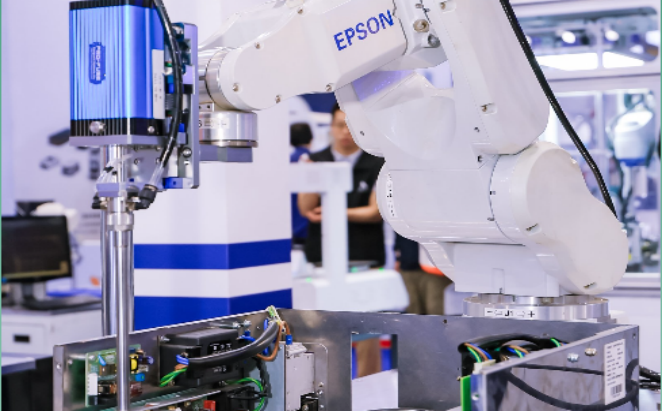
The trajectory of Chinese manufacturing has shifted from high-volume labor to high-tech autonomy in less than a generation. For global observers, this transformation is best viewed through the lens of professional trade events that have documented every milestone of the industrial “brain” as it evolved alongside the “machine.” In 2026, as we stand on the cusp of the “Embodied AI” era, the upcoming China robot exhibition 2026 represents the pinnacle of this timeline, showcasing a level of interconnectivity that was once purely theoretical.
Understanding how we reached this point requires a look at the synergy between industrial policy and the platforms that brought these innovations to the market. Leading this charge for over 26 years, ITES China has evolved from a traditional machine tool show into a comprehensive ecosystem where the future of robotics and automation is defined.
The Foundation: Transitioning to Precision and Speed
In the early 2000s, China’s industrial landscape was primarily defined by metal cutting and basic fabrication. During this period, the predecessors of today’s massive robotics & automation expo focused on hardware: CNC lathes, milling machines, and heavy-duty presses. However, as global demand for electronics and automotive components surged, the focus shifted from sheer output to precision.
By the mid-2010s, the “Made in China 2025” initiative catalyzed a pivot toward intelligent manufacturing. This era saw the first major wave of industrial robot integration—primarily 6-axis arms for welding and painting. During this transition, ITES China became the designated “Shenzhen Brand Exhibition,” serving as the primary gateway for international automation brands to enter the Pearl River Delta. This period marked the end of isolated machinery and the beginning of the integrated production line.
2026: The Era of Embodied AI and Humanoid Labor
As we look toward the China robot exhibition 2026, the narrative has shifted again. It is no longer enough for a robot to be precise; it must now be “intelligent” and “embodied.” Unlike the static robotic cells of the past, the 2026 iteration of the expo highlights robots that can perceive, navigate, and self-correct within unstructured environments.
Visitors to ITES China 2026 will witness a diverse matrix of technology that includes:
- Humanoid Platforms: Robots designed for “brownfield” facilities where they must navigate stairs and narrow aisles alongside human workers.
- Digital Twins: A “simulate-then-procure” model where entire work cells are optimized in virtual reality before a single piece of hardware is purchased.
- Micro-Precision Automation: Systems achieving 2-micron accuracy, essential for the next generation of semiconductors and medical devices.
Strategic Integration at ITES China
The evolution of the robotics & automation expo format mirrors the complexity of the industry. For 2026, the exhibition has moved beyond a simple hall-by-hall layout to a “value chain” architecture. This model allows a procurement manager to see a precision component in one hall and immediately walk to the next to see the autonomous mobile robot (AMR) that will handle its logistics.
This structured approach solves a critical modern pain point: the integration gap. By bringing together over 600 high-end equipment enterprises and specialized automation integrators, the show ensures that tech suppliers and factory owners can align on technical parameters and ROI in real-time. It is this concentration of expertise that has transformed the event from a local trade fair into a global barometer for industrial trends.
A Future-Ready Manufacturing Ecosystem
The history of automation in China is a story of rapid scaling followed by intense specialization. As the China robot exhibition 2026 prepares to open its doors in Shenzhen, it stands as a testament to how far the industry has come—from basic manual machining to a self-correcting, AI-driven “Digital Nervous System.”
For any organization invested in the future of production, participating in ITES China is no longer just about sourcing equipment; it is about engaging with the living history of industrial progress. The 2026 edition promises to be the most significant yet, marking the moment when autonomous intelligence moves from the laboratory to the production floor at a global scale.